Monywa
Monywa
Monywa concentrates some of Birmanie's most singular Buddhist sites: the Hpo Win Daung caves adorned with frescoes, a pagoda housing 582,000 Buddhas, and the colossal statues of Bodhi Tataung.
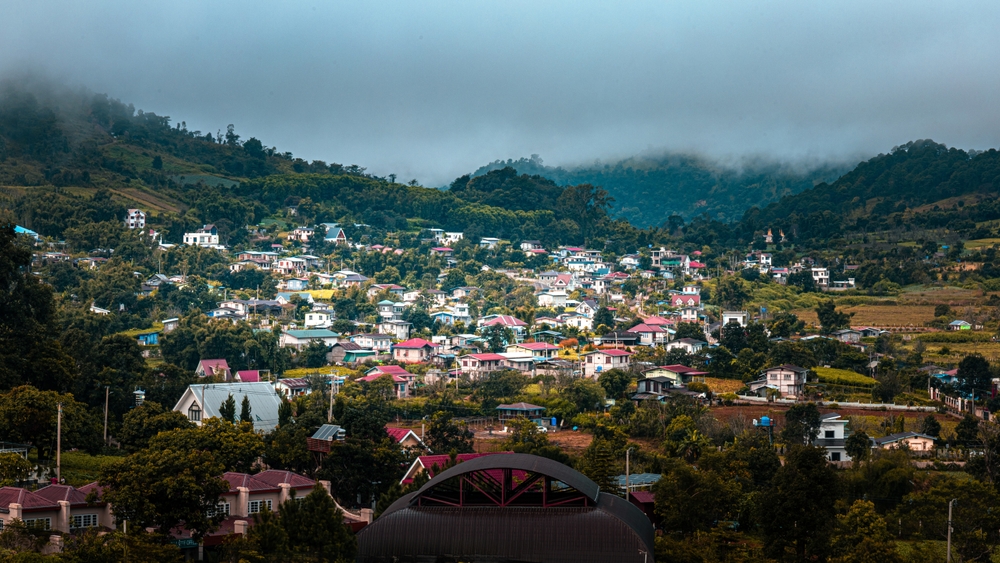
Monywa is the capital of the Sagaing region, on the western bank of the Chindwin River, approximately 135 km northwest of Mandalay. A commercial hub of northwestern Birmanie, the city is best known for its spectacular Buddhist sites—caves adorned with thousands of Buddhas, colossal statues, and red brick pagodas—which make it a worthwhile stop in its own right on the road from Mandalay.
Quick Reference
- Access from Mandalay: regular buses (approximately 3-4 hours) and seasonal boats on the Irrawaddy/Chindwin.
- Dress code: shoulders and knees covered in all temples and caves; shoes removed at the entrance to sacred areas.
- Recommended duration: 1 to 2 days to cover the main sites.
- Currency: Burmese kyat; few establishments accept cards.
- Best time to visit: November to February (dry season, pleasant temperatures).
What to See
Monywa concentrates several major Buddhist sites within a confined area. The Hpo Win Daung and Shwe Ba Taung caves, carved into sandstone cliffs, shelter hundreds of chambers adorned with frescoes and statues. The Thanboddhay complex groups thousands of small Buddhas embedded in its walls and towers. At Bodhi Tataung stand two giant statues: a standing Buddha among the tallest in the world and a reclining Buddha of considerable size.
History and Context
The Monywa region has been inhabited for centuries by the Bamar and Chin peoples. The oldest caves at Hpo Win Daung date back to the 14th century; their decoration continued through the colonial era. Thanboddhay was founded in the 20th century by the monk Moehnyin Sayadaw, a revered figure in Burmese Buddhism. The city itself developed as a commercial center thanks to river trade on the Chindwin.
Highlights of Your Visit
Hpo Win Daung Caves
More than 400 caves carved into a red sandstone hillside, connected by stairs and walkways. The murals blend Bagan, Inwa, and Konbaung styles. Some chambers preserve gilded lacquer Buddhas of remarkable fineness. The atmosphere is cool and silent, quite different from open-air temples.
Shwe Ba Taung
Neighboring Hpo Win Daung, this smaller series of caves is carved into an isolated rocky outcrop. Less frequented, it offers a more intimate experience with well-preserved rock sculptures.
Thanboddhay Pagoda
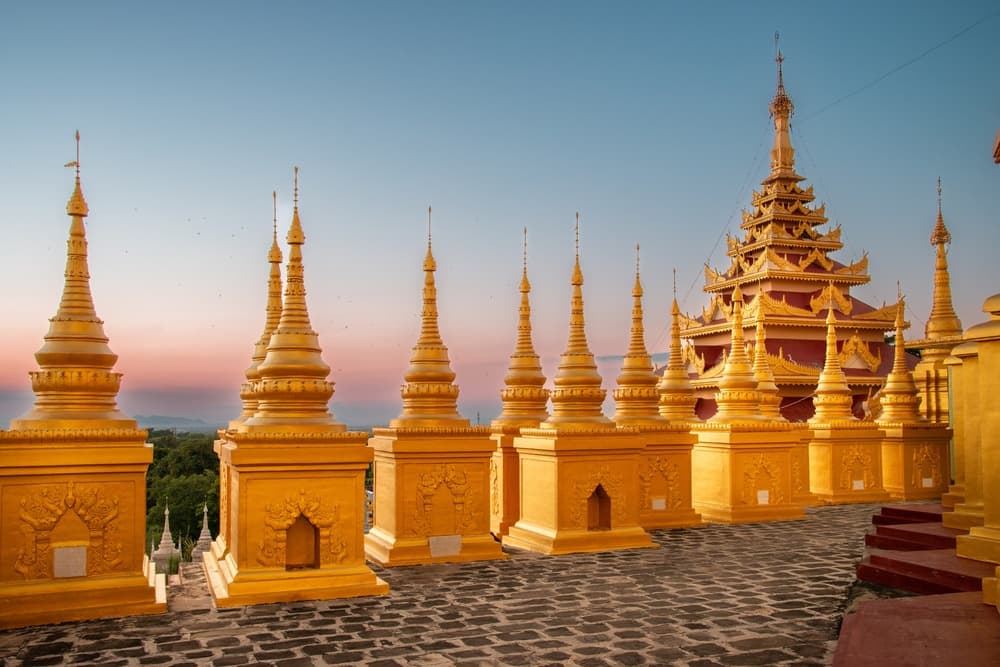
Built between 1939 and 1952, the pagoda is covered with 582,000 small Buddha statues according to official site figures. Its multicolored towers and mosaics make it one of Birmanie's most visually dense Buddhist structures.
Bodhi Tataung
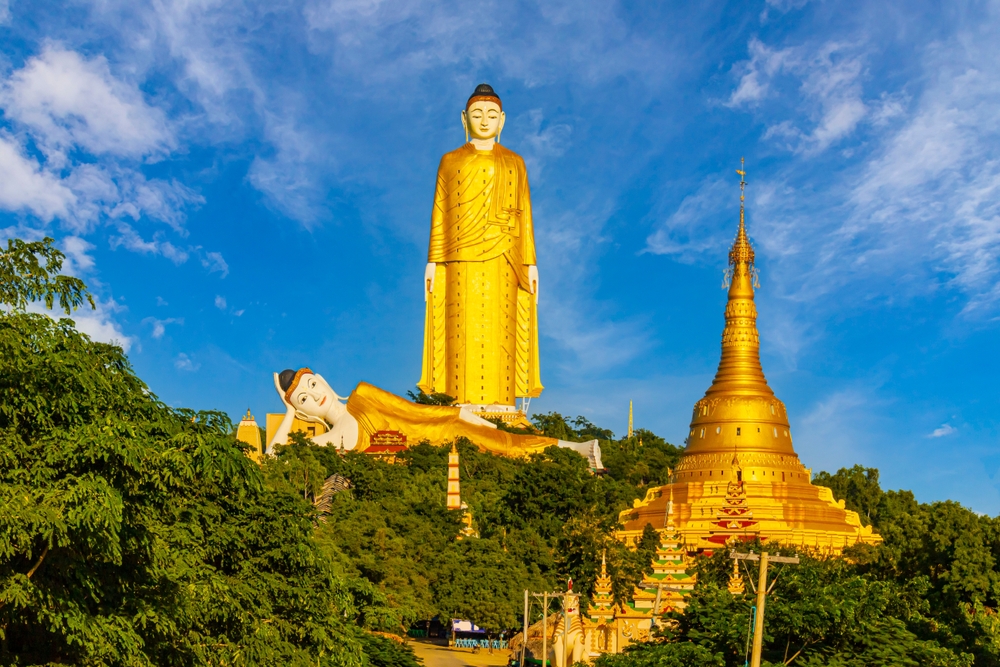
The site features a standing Buddha nearly 130 meters tall, one of the tallest in the world, and a reclining Buddha over 90 meters long. Inside the standing Buddha, staircases allow you to ascend through scenes illustrating Buddhist hells and heavens.
Etiquette and Visiting Rules
- Remove shoes and socks before entering any sacred area.
- Dress modestly: shoulders and knees must be covered.
- Speak softly in the caves; some house monks in meditation.
- Do not touch the statues or climb on them.
- Ask permission before photographing monks or the faithful at prayer.
Photography Tips
Golden morning light is ideal for Thanboddhay, whose towers gleam facing the rising sun. In the Hpo Win Daung caves, a tripod or high ISO sensitivity is necessary: natural light there is dim. For the Bodhi Tataung statues, twilight lends a warm hue to the colossal silhouettes. Avoid flash in the caves to preserve the frescoes.
Location and Access
Monywa is located in the Sagaing region, on the western bank of the Chindwin. From Mandalay, buses depart regularly from the Kwe Se Kan terminal. The Hpo Win Daung and Shwe Ba Taung sites are approximately 25 km west of the city, accessible by taxi or motorbike taxi. Thanboddhay and Bodhi Tataung are a few kilometers north of Monywa, easily combined into a half-day excursion.
Nearby
- Mandalay — former royal capital, natural starting point for reaching Monywa.
- Sagaing — hill of hundreds of white pagodas, between Mandalay and Monywa.
- Bagan — plain of temples, accessible from Mandalay by extending your circuit.
Frequently asked questions
The dry season, from November to February, offers pleasant temperatures and clear skies. Avoid the monsoon (June-October): roads to the caves can be difficult to access.
Yes, if you leave early in the morning. However, plan to spend one night here to visit the Hpo Win Daung caves and the city's sites without rushing.
A local guide is recommended: the cave network is labyrinthine and iconographic explanations greatly enrich the visit.
Yes. Covered shoulders and knees are required at the caves, pagodas, and Bodhi Tataung. Sarongs are sometimes provided at entrances, but it's best to bring your own clothing.
Yes, interior staircases allow you to ascend the statue while passing through levels illustrating Buddhist cosmology. Access may occasionally be closed for maintenance or religious reasons.
Photography is generally permitted, but flash is discouraged to protect the frescoes. Check signs at the entrance of each cave; some chambers may have specific restrictions.
Want to discover this destination?
Our local advisors design your tailor-made trip.