Bodhi Tataung
Bodhi Tataung
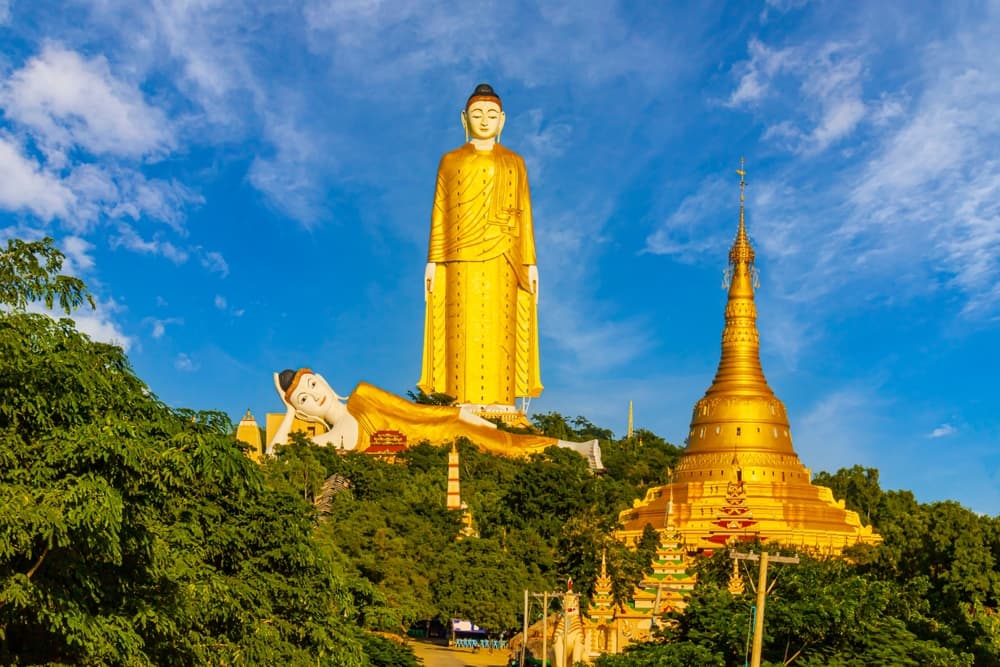
A short distance from Monywa, Bodhi Tataung unites a 130-meter standing Buddha and a reclining Buddha stretching over 90 meters, surrounded by hundreds of pagodas and sacred gardens.
A few kilometers from Monywa, in the Sagaing region, the Bodhi Tataung site is home to two of the world's largest Buddha statues. One stands upright, the other reclines. Around them stretches a vast complex of pagodas, gardens, and galleries adorned with thousands of small statues. The site remains active, visited by Burmese pilgrims, and offers a dense religious and architectural experience, far removed from mainstream tourist circuits.
Practical Information at a Glance
- Admission: Fee required for foreign visitors
- Dress code: Shoulders and knees must be covered; shoes must be removed in sacred areas
- Recommended duration: 2 to 3 hours to explore the entire site
- Access: By taxi or motorcycle taxi from central Monywa; the site is approximately 10 km southeast of the city
What You'll See
The standing Buddha measures approximately 130 meters in height. The reclining Buddha, representing Parinirvana, exceeds 90 meters in length. Inside the reclining Buddha, galleries depict scenes of Buddhist hell and the cycle of rebirth, sculpted and painted with striking realism.
The rest of the site comprises hundreds of small pagodas lined in rows, statues of monks and deities, and gardens maintained by the local monastic community.
History and Context
Construction of the complex began in the 1990s under the guidance of a Burmese monk, Mohnyin Thambuddhei Sayadaw. The project continued over several decades, financed by donations from the faithful. The name "Bodhi Tataung" roughly translates to "thousand Bodhi trees," a reference to the sacred fig trees planted throughout the site.
The site illustrates the Burmese tradition of collective religious merit: each statue, each pagoda represents an act of individual or communal devotion.
Highlights of Your Visit
The Standing Buddha
The silhouette stands out from the road. Up close, the scale is difficult to grasp. The statue is visible from much of the surrounding plain and serves as the site's main landmark.
Inside the Reclining Buddha
You enter through the base of the statue. The interior galleries present dioramas depicting the different levels of hell according to Theravada Buddhist cosmology. The scenes are explicit and designed for moral instruction of the faithful.
Avenues of Pagodas
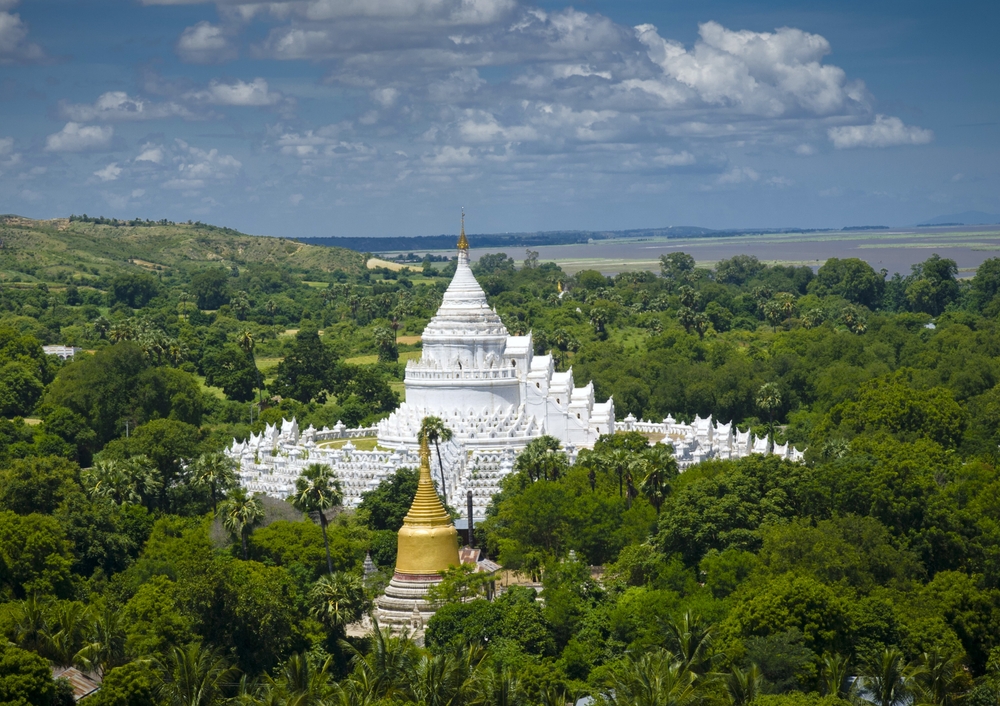
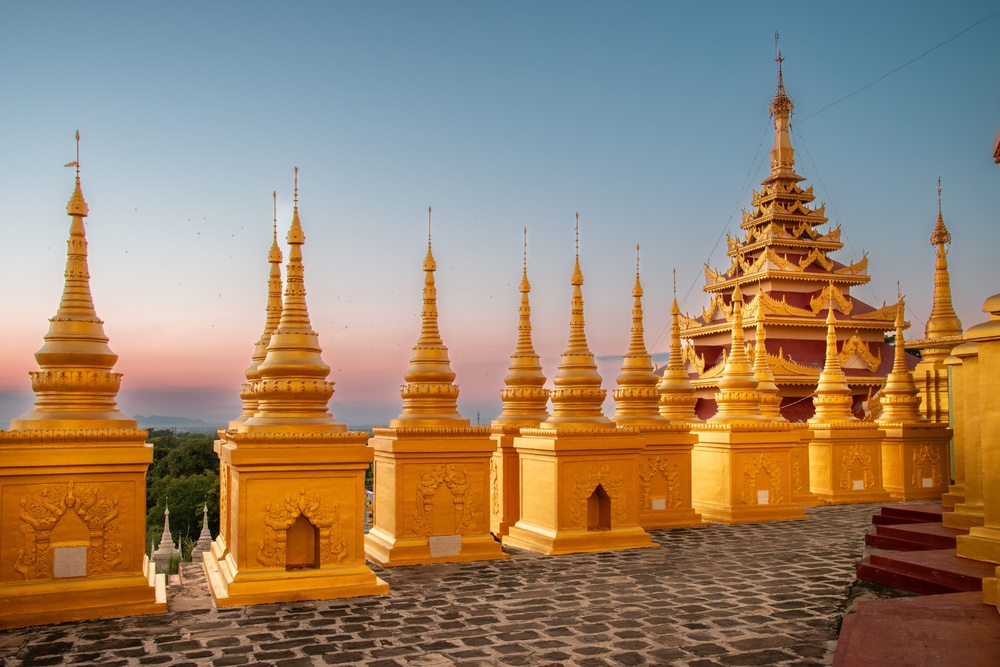
Hundreds of small white stupas line up in regular rows. Each houses a Buddha statue. Together they create an atmosphere of contemplation, especially in the early morning when pilgrims make their offerings.
Etiquette and Visitor Guidelines
- Remove your shoes before entering worship areas and inside the statues.
- Dress modestly: shoulders and knees must be covered.
- Maintain a calm and respectful demeanor; the site is in constant religious use.
- Do not touch the statues or climb on them.
Photography Tips
Morning light is ideal for photographing the standing Buddha, positioned to capture raking light. The interior of the reclining Buddha is dim: a camera capable of low-light photography or a tripod is useful. The pagoda avenues offer beautiful perspectives in late afternoon.
Photography is generally permitted throughout the site, including inside the galleries.
Location and Access
Bodhi Tataung is located approximately 10 kilometers southeast of Monywa. The city is accessible from Mandalay by bus or car (approximately 3 hours). From Monywa, the site is reached by taxi, motorcycle taxi, or bicycle for the more adventurous. There is no direct or regular public transport to the site.
Wheelchair accessibility is limited due to stairs and uneven terrain in certain areas.
Nearby Attractions
- Thanboddhay Pagoda — a few kilometers away, this pagoda covered with hundreds of thousands of small Buddha statues is one of the region's most remarkable religious sites.
- Po Win Daung Caves — Buddhist rock complex carved into stone, adorned with frescoes and statues dating back several centuries, west of Monywa.
- Monywa City Center — lively trading town on the banks of the Chindwin River, the starting point for exploring the Sagaing region.
Frequently asked questions
The dry season, from October to February, offers the most pleasant conditions. Heat is intense from March to May. The monsoon (June-September) makes some paths muddy but the site remains open.
Yes, both sites are close to each other and can easily be visited in the same half-day by taxi or motorcycle taxi from Monywa.
Not throughout the entire outdoor site, but it is mandatory at the entrances to worship areas, pagodas, and inside the two large statues.
Access involves stairs and narrow corridors. Those with mobility challenges or claustrophobia may find the interior visit difficult.
Yes, photography is generally allowed, including in the interior galleries. Maintain discreet behavior in active prayer areas.
Interested in this visit?
We can include it in your personalised itinerary.