Bagan Plain
Over 2000 red-brick temples scattered across 50 km² of dry plains, remnants of the Pagan Kingdom from the 11th-13th centuries, to be explored by e-bike from Nyaung U.
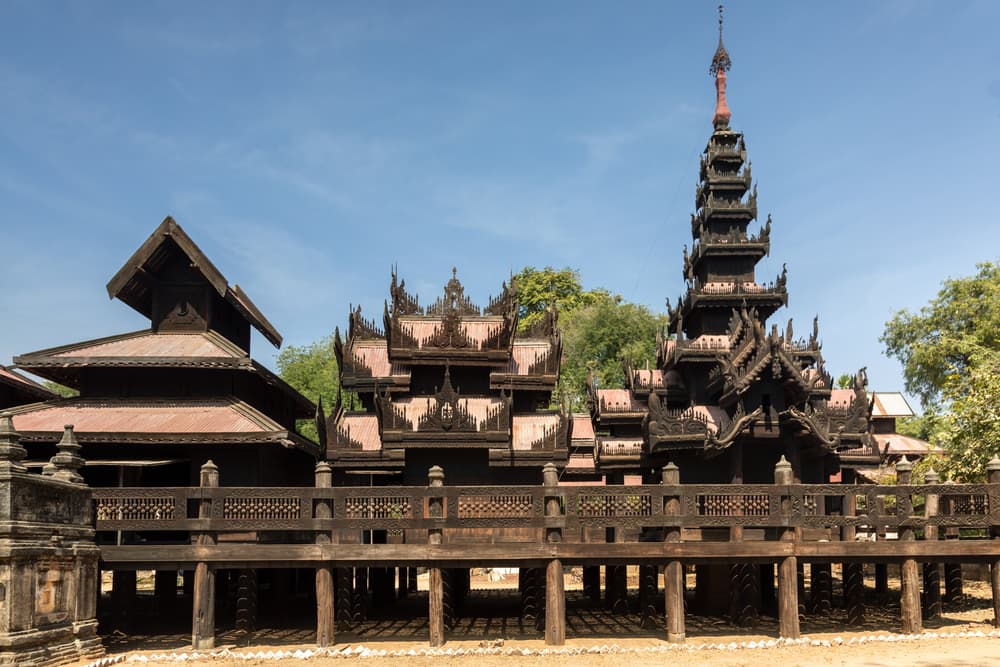
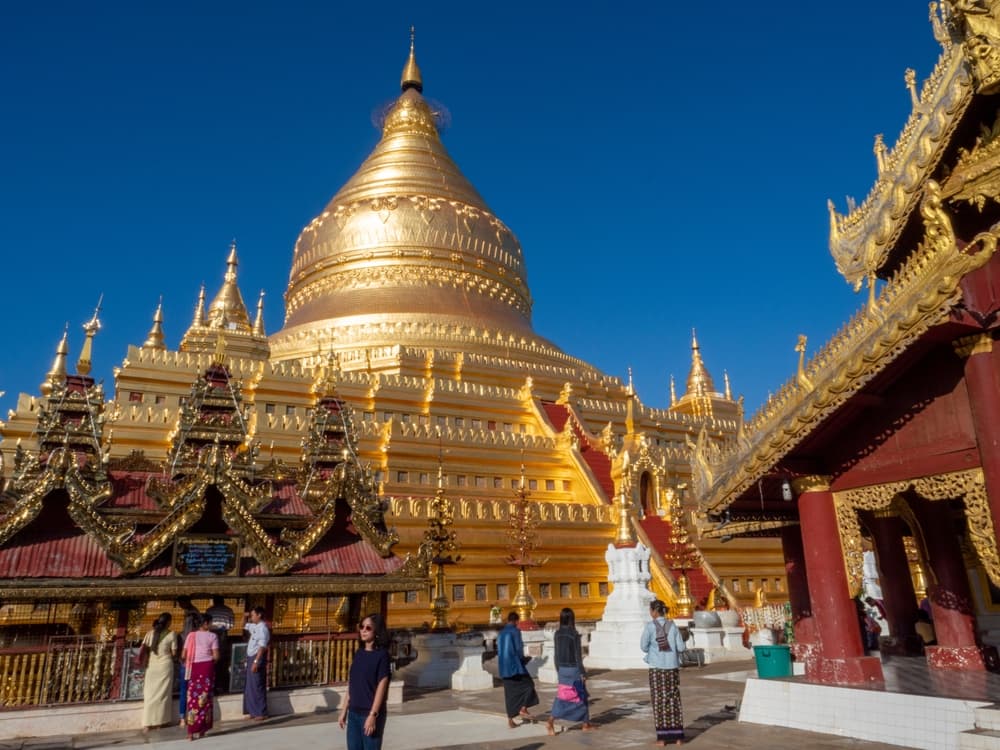
The Bagan Plain stretches along the eastern bank of the Irrawaddy, approximately 150 km southwest of Mandalay. Across some fifty square kilometers of dry, dusty terrain, more than 2000 temples, stupas and monasteries of red brick survive from the Pagan Kingdom, which ruled upper Birmanie between the 11th and 13th centuries. At the height of King Anawrahta and his successors, the site likely contained more than 10,000 religious structures. Earthquakes, looting and gradual abandonment following the Mongol invasion of 1287 took their toll. What remains today forms the most extensive ensemble of Buddhist monuments contemporary with Angkor.
The plain divides into three zones that our team uses as logistical reference points: Old Bagan, the royal enclosure centered on the Ananda, Thatbyinnyu and Gawdawpalin temples; New Bagan, the village relocated in the 1990s where many mid-range accommodations are concentrated; and Nyaung U, a trading town to the north, close to the airport and the Mani Sithu market where regional producers arrive each morning. Major temples such as Dhammayangyi, Sulamani and Htilominlo are scattered between these three hubs, connected by sandy tracks passable by e-bike.
The climate is that of the central dry zone, one of the country's most arid regions. Less than 700 mm of rain falls annually, mostly between June and September. Temperatures climb to 40°C, sometimes 42°C, in April and early May, just before the monsoon. Conversely, December and January mornings dip to 14 or 15°C, which makes a real difference for hot air balloon flights or cycling excursions. Light filtered through suspended dust gives the brick its characteristic ochre-red hue that defines photographs of the plain.
Around the temples, agricultural life continues. Farmers cultivate peanuts, sesame, pigeon peas and sugar palms, whose fermented sap produces htan ye, a kind of warm palm wine. The lacquer village of Myinkaba, a few kilometers south of Old Bagan, perpetuates a technique introduced in the 12th century: successive layers of lacquer over a woven bamboo frame, curing in humid caves for weeks, fine needle engravings. Workshops like Bagan House or Maung Aung Myin can be visited in an hour and help explain why a finished piece can take six months of work.
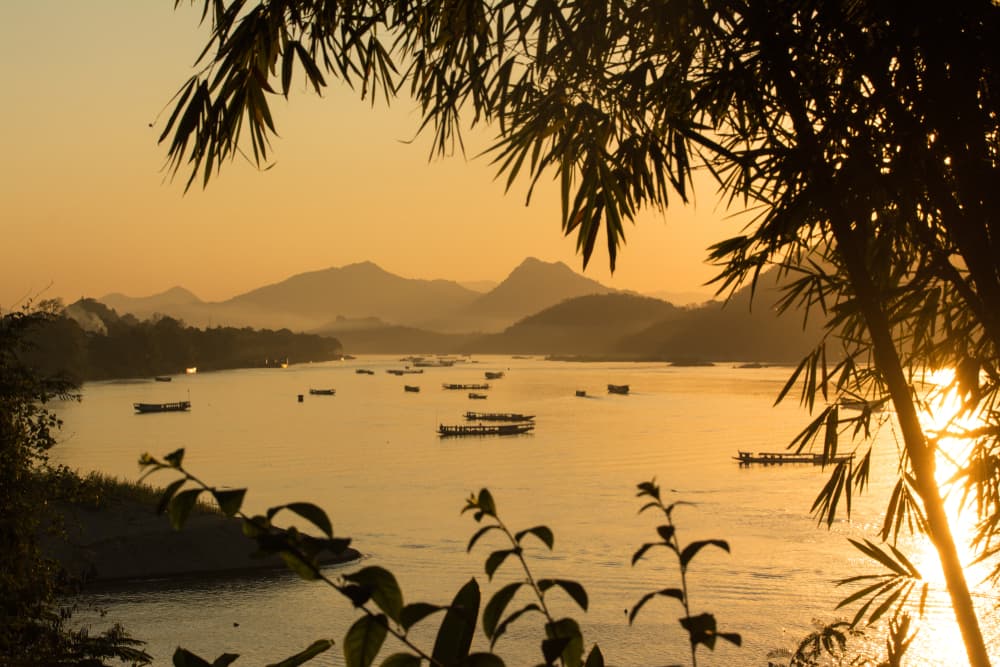
On the culinary side, Bagan cuisine leans toward the dry flavors of central Birmanie: fermented tea leaf salad (lahpet thoke), Burmese-style mutton curry, highly fragrant local tomatoes, and toddy palm sugar used in numerous desserts. Restaurants perched on the Irrawaddy's banks, near Bupaya, serve at sunset when the river takes on a copper hue and fishermen haul in their nets. The Ananda Festival, at full moon during Pyatho (December-January), draws pilgrims and itinerant merchants for about ten days around the temple of the same name: it's one of the rare moments when the plain recaptures something of its old religious vitality.
To Discover
Sunrise from a secondary temple. Rather than the crowded esplanades, our team directs you to lesser-known stupas in the central zone, accessible on foot before 6am. Low mist over the plain, balloons at altitude and the silhouettes of Dhammayangyi and Sulamani temples gradually emerging.
Hot air balloon over the plain. Flight of approximately 45 minutes operated October to March by Balloons over Bagan and two competing operators. Takeoff at dawn from a field near Nyaung U, slow drift over the temples according to wind conditions.
Lacquer workshops in Myinkaba. Visit family-run workshops in the village, demonstration of bamboo weaving, lacquer baths and needle engraving. Understand why a quality piece takes several months and costs what it does.
Sunset on the Irrawaddy. Two-hour cruise in a traditional boat departing from Bupaya, stretching to the height of Mount Tuyin Taung. The river is more than a kilometer wide here in the dry season, considerably wider in September.
Mount Popa and its perched monastery. 50 km to the southeast, an extinct volcano topped by the Taung Kalat monastery, accessible by 777 steps. A place of worship for the nats, pre-Buddhist spirits still revered in Birmanie. Half-day from Bagan.
When to Go
The best period spans November to February: clear skies, daytime temperatures of 28 to 32°C, cool mornings at 14-16°C that make early starts pleasant. This is also the window for hot air balloon flights, which operate only October to March. March remains workable but heat rises quickly, around 36°C. April and May are best avoided except by necessity: 40 to 42°C in the afternoon, harsh light, little pleasure cycling between temples.
The monsoon, June to September, brings short but intense showers, especially in August. The plain remains relatively dry compared to the south of the country (less than 700 mm annually), and the landscape turns green, which radically changes photographs. October is a good intermediate season, less crowded than December, with vegetation still verdant and temperatures becoming comfortable again.
Practical Information
We recommend three nights on site to do things properly: one day e-biking the major temples, one morning devoted to lesser-known temples and Myinkaba village, one excursion to Mount Popa or a cruise on the Irrawaddy. With only two nights, choices must be made. Nyaung U airport receives daily flights from Yangon (1h20) and Mandalay (30 min). By slow boat from Mandalay, the descent down the Irrawaddy takes 10 to 12 hours and is itself an interesting stage.
Bagan logically combines with Mandalay and surroundings to the north (1 hour flight or day by boat), then Inle Lake and Shan State to the southeast to change scenery and gain altitude. The sequence Yangon - Bagan - Inle - Mandalay forms the classic circuit over 12 to 14 days. The region suits all profiles: families with children from 7-8 years old, contemplative travelers, history and architecture enthusiasts. Hotel options range from simple guesthouses in Nyaung U to upscale resorts in New Bagan, with several charming properties in restored teak buildings.