South and Beaches
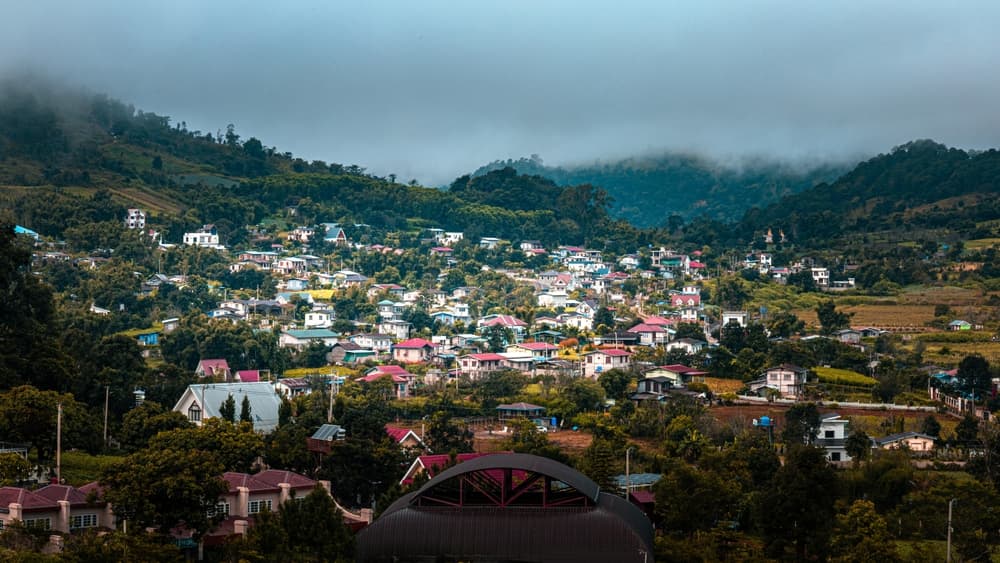
Three souths in one: the Ngapali beach, the limestone formations of Karen State around Hpa-an, and the Mergui archipelago with its 800 remote islands.
Southern Myanmar stretches for over 1,200 kilometres as a narrow band between the Bay of Bengal to the west and the Andaman Sea to the southeast. We operate in three distinct zones that share little resemblance: Ngapali beach in Rakhine State, the karst landscapes of Karen State around Hpa-an and Mawlamyine, and the Mergui (Myeik) archipelago to the far south, facing Thailand. Each responds to a different travel logic, and it is rare to combine all three on a single journey.
Ngapali, accessible by a 55-minute flight from Yangon, stretches seven kilometres of white sand bordered by coconut palms, dotted with the fishing villages of Gyeiktaw, Lintha and Myabyin. Teak boats return at dawn, and the stalls of Thandwe market display squid, tiger prawns and parrotfish sold at auction. The resort moves to the rhythm of the dry season, October to May. During the southwest monsoon, from June to September, nearly all hotels close and domestic flights become scarce.
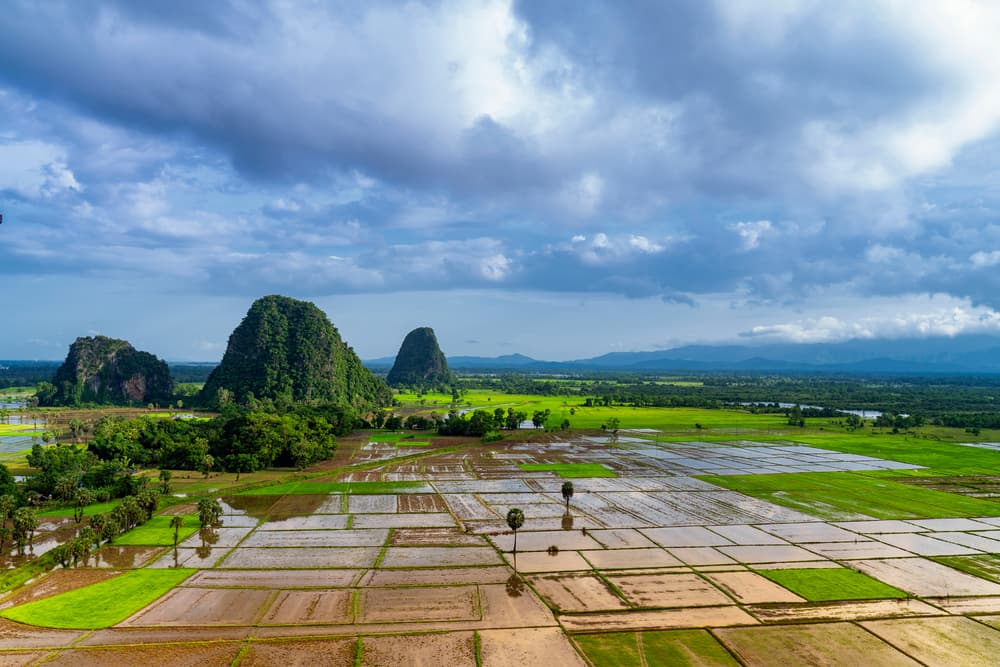
Karen State, around Hpa-an, offers a completely different register. Mount Zwegabin (722 m) overlooks a rice plain crossed by the Thanlwin River (Salween), one of Asia's last great rivers still free of dams along its middle course. Limestone caves shelter active Buddhist sanctuaries: Sadan, crossed on foot for 800 metres then by boat on the southern side; Kawgun, whose walls are covered with over 2,000 votive tablets from the 7th century; Kyauk Ka Lat, a monastery perched on a pinnacle emerging from a lake. In Mawlamyine, the former capital of British Burma between 1826 and 1852, colonial houses, mosques and pagodas bear witness to a rare cultural blend: here Burmese, Karen, Mon, Muslim and Hindu Indians, and Sino-Burmese communities coexist.
Further south, the Tanintharyi region and Mergui archipelago encompass around 800 islands scattered across 36,000 km² of Andaman Sea. Access points are Kawthaung (formerly Victoria Point) at the far tip, or Myeik further north. The Moken, an Austronesian sea people, still spend part of the year on their kabang, wooden boats where entire families are born and die. Their numbers are declining (around 2,000 to 3,000 people on the Burmese side) and younger generations are gradually settling in villages like Bo Cho or Nyaung Wee. Cruises, in schooners or converted fishing boats, follow a flexible itinerary between reefs, mangroves and deserted beaches.
Southern cuisine reflects this coastal diversity. In Mawlamyine, you'll taste mohinga (fish noodle soup) considered among the best in the country, as well as htamin jin, fermented rice kneaded by hand and served with fried garlic. On the Ngapali side, beachfront restaurants offer grilled barracuda and tha yet thi thoke, green mango salad with chilli and peanuts. In the archipelago, meals consist almost exclusively of what fishermen bring in each morning.
Economically, the south remains structured around fishing, rubber (Karen State and Tanintharyi concentrate most of Myanmar's production), betel nut and a few tin mines in the Dawei hinterland. Tourism here is more low-key than in Bagan or Inle, which partly explains its appeal to travellers seeking to venture off the beaten path.
Must-see
Seven kilometres of beach at Ngapali. White sand and coconut palms between the fishing villages of Lintha and Gyeiktaw, with boats returning at dawn and a fish market in Thandwe.
Limestone formations around Hpa-an. Climbing Mount Zwegabin (722 m) at sunrise, walking through Sadan cave then continuing by boat, and a stop at the island monastery of Kyauk Ka Lat.
Cruise in the Mergui archipelago. Four to seven nights in a schooner among 800 uninhabited islands, with the possibility of meeting Moken families still semi-nomadic on their kabang.
Mawlamyine and Mon colonial heritage. A walk among the teak houses of the 1880s, the Kyaikthanlan pagoda sung by Kipling, and a stop at the Hpa Pu cave monastery on the Thanlwin.
Thandwe morning market. Just 11 km from Ngapali, one of the most active Rakhine markets: dried fish, balachaung (shrimp condiment), and locally woven fabrics with distinctive patterns.
When to go
The useful season for all of southern Myanmar runs from late October to mid-April. At Ngapali, hotels reopen around 1 October and close almost entirely between mid-May and late September: the southwest monsoon dumps over 4,500 mm of annual rainfall here, concentrated over these four months, and the sea becomes impassable. Dry season temperatures fluctuate between 24°C at night and 32°C during the day, with sea temperatures of 27-28°C. March and April are the hottest, reaching 35°C.
In Karen State and around Hpa-an, the window is wider: from November to February, temperatures remain comfortable (18 to 30°C) and the rice fields turn golden yellow in December. The monsoon, equally intense here, makes secondary trails impassable between June and September. For the Mergui archipelago, cruises operate strictly from October to late April; beyond that, the Andaman swell closes the area. The best months are February and March, with calm seas and optimal underwater visibility.
Practical information
Allow a minimum of 3 nights at Ngapali to enjoy the beach without rain, accessible by direct flight from Yangon (KBZ or Myanmar Airways, approximately 55 minutes). For the Hpa-an / Mawlamyine area, plan 3 to 4 days: the road from Yangon takes 6 to 7 hours via Bago, or 45 minutes by flight to Mawlamyine. The Mergui archipelago requires a longer commitment: a minimum of 4 nights cruising, ideally 6 or 7, departing from Kawthaung accessible by flight via Yangon with a stopover in Dawei.
Ngapali combines well at the end of a circuit after Bagan and Inle, as a beach interlude. Hpa-an fits naturally with Yangon in a land-based loop. Mergui, more demanding logistically and financially, is suited to travellers with 18 days or more in Myanmar who accept simple onboard comfort. The south appeals to couples seeking calm and beaches, contemplatives in search of karst landscapes, and seasoned travellers drawn to maritime off-the-beaten-path experiences. Less suitable for families with young children for the cruise portion, due to long journeys and lack of medical facilities on the islands.