Inle Lake and Shan State
At 880 metres elevation, Inle Lake unfolds its stilt villages, Intha fishermen rowing with a single leg, and floating gardens in the heart of Shan State.
Inle Lake occupies a depression at 880 metres elevation in the heart of Shan State, the largest of the country's fourteen states and regions. Twenty-two kilometres long and eleven kilometres wide, it is ringed by forested hills that rise towards 1,500 metres. The water is shallow here, rarely deeper than three metres in the dry season, which has shaped a singular aquatic lifestyle: stilt villages, floating gardens anchored to bamboo poles, travel by long-tail motorised canoes. Our team has been working the region from Nyaung Shwe, the lake's northern gateway, where flights arrive from Yangon and Mandalay via Heho airport.
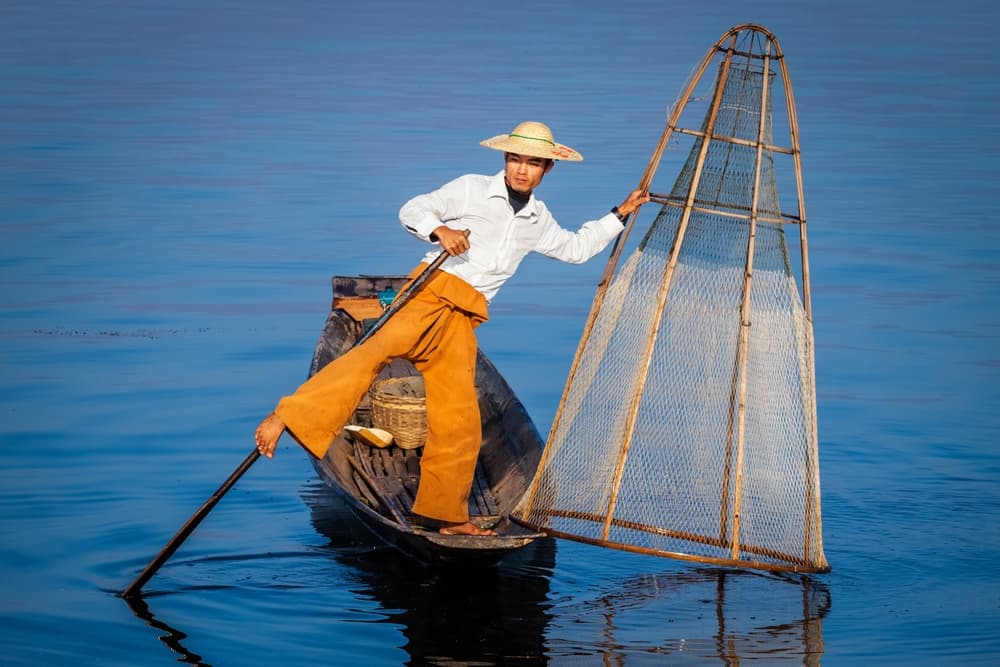
The Intha, literally the sons of the lake, number around 70,000 spread across 17 lakeside villages. Their technique of rowing with one leg, foot wrapped around the paddle, frees their hands to work the conical bamboo fish trap. This is not staged folklore: it is the daily fishing method, more efficient standing to spot fish in the aquatic vegetation. Around them live the Shan on the plain, the Pa-O in the south-eastern hills recognisable by their black or bright orange turbans, the Danu, the Taung Yo and further afield the Palaung in the heights of Namhsan.
The local economy rests on four visible pillars along the waterways. The floating gardens of Kela produce tomatoes on a large scale, exported across the country. The weaving workshops of Inn Paw Khone work with lotus stem fibre, extracted by hand and spun into scarves that demand several weeks of labour. The blacksmiths of Nampan village still hammer over charcoal fires. And the production of silver and cheroots rolled in thanatphet leaves completes the artisanal landscape. The rotating five-day market shifts location, passing through Ywama, Maing Thauk, Phaung Daw Oo, Nampan and Indein, structuring the social rhythm of the entire basin.
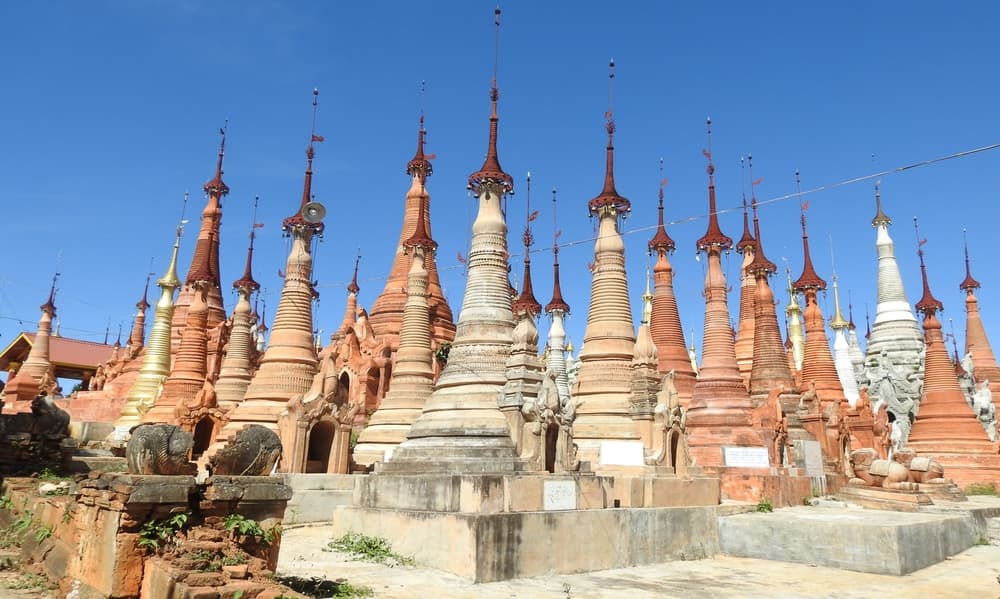
South of the lake, the Indein site lines up more than 1,000 red-brick stupas from the 17th and 18th centuries, some restored to gleaming gold, others left to vegetation. It is reached by a winding canal of an hour from Ywama. To the west, the Phaung Daw Oo pagoda houses five Buddha statues unrecognisable beneath the thickness of gold leaf, four of which are paraded in a royal barge during the festival of the same name in September or October according to the lunar calendar. This is the region's major religious event, spanning eighteen days.
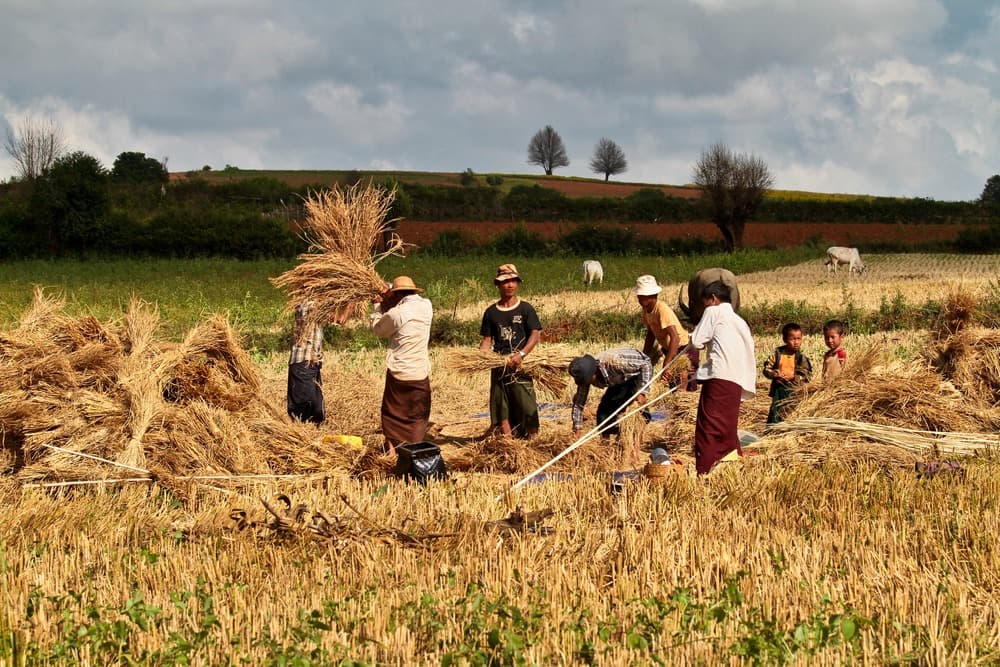
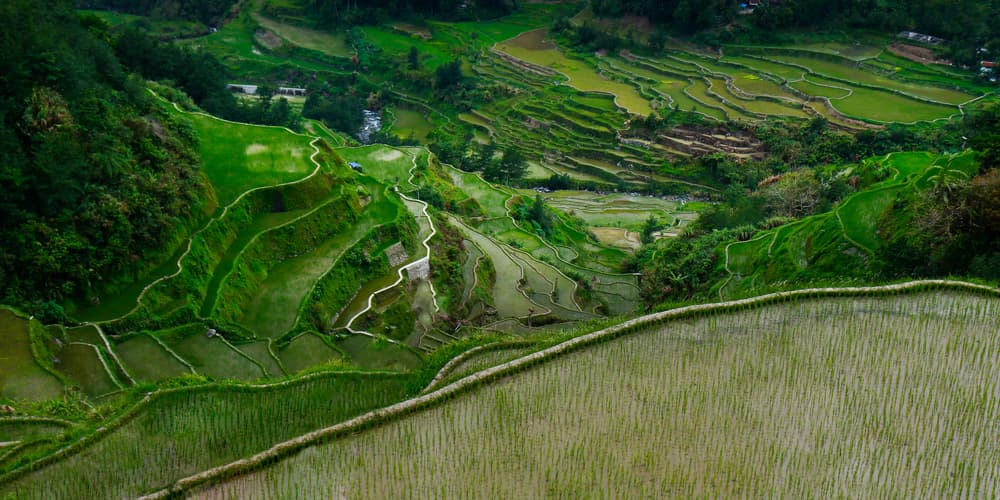
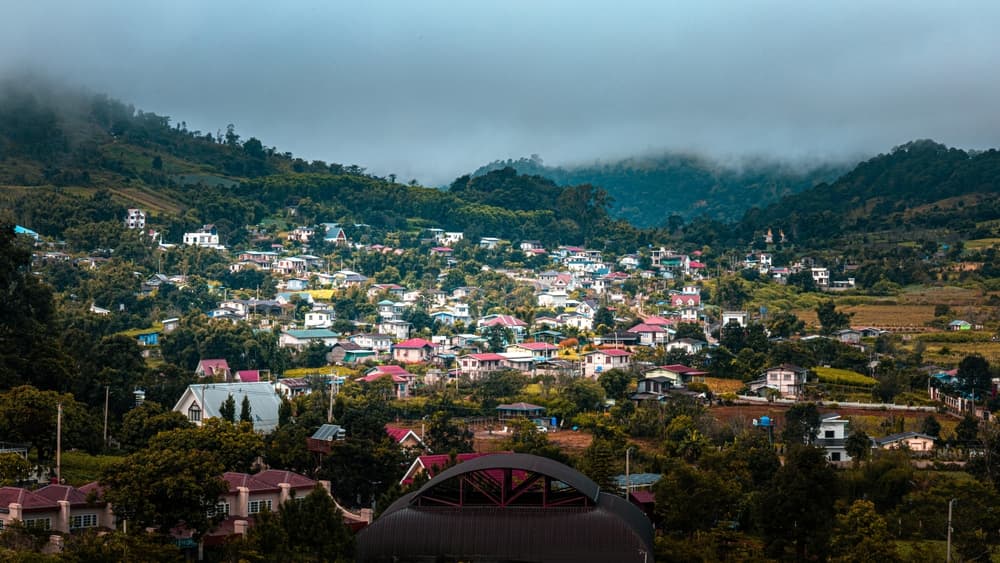
Shan State reaches far beyond the lake. To the west, Kalaw, a former colonial hill station at 1,320 metres, serves as a hub for two or three-day treks that reach Inle through Pa-O and Danu villages, crossing ginger fields, dried chilli plantations and terraced rice paddies. Further east, Pindaya and its limestone cave filled with 8,000 Buddha statues merit a half-day excursion from Kalaw. To the north-east, towards the Chinese border, Hsipaw and Kyaukme open onto more challenging treks through Shan and Palaung villages, where tea cultivation still dominates the slopes.
The temperate climate changes everything compared to the rest of the country. December and January nights drop to 10°C, sometimes 6°C at Kalaw, whilst daytime temperatures peak at 24 or 25°C. This is a region where you wear a fleece in the morning and a t-shirt in the afternoon—a surprise for travellers accustomed to the heat of Bagan or Yangon.
To discover
Intha fishermen rowing with one leg. Early morning on the lake, low mist on the water and figures balanced on the bow of the canoe. The technique serves to see the fish in the vegetation, not to pose for photographs.
Indein stupas and winding canal. An hour's boat journey from Ywama through a narrow waterway, then a line of more than 1,000 red-brick stupas from the 17th and 18th centuries, partly overgrown by fig trees.
Kalaw-Inle trek in two or three days. Sixty kilometres on foot through Pa-O and Danu villages, nights with local families or in monasteries, arrival by canoe from Indein along the western shore.
Lotus fibre woven at Inn Paw Khone. Manual extraction of filaments from fresh stems, a single scarf demands four to six weeks of work. Only a handful of workshops worldwide perpetuate this craft.
Five-day rotating market. Depending on the day of your visit, the market is held in Maing Thauk, Nampan, Phaung Daw Oo, Indein or Ywama. The Pa-O descend from the hills by truck to sell chillies and tobacco.
When to go
The best period runs from October to March. The sky is clear, the lake water is high after the monsoon, and the floating gardens are in full production. Expect 24 to 26°C during the day and 8 to 12°C at night in December-January on the lake, dropping to 5 or 6°C at Kalaw at the same dates. A fleece and windbreaker are necessary for sunrise pirogue trips, the air is cold at 40 km/h on the water.
From April to May, temperatures rise to 32°C and the air becomes hazy due to agricultural fires, visibility degrades. The rainy season from June to September brings daily showers, often late in the day, with 200 to 300 mm per month. The lake remains navigable but treks from Kalaw become muddy and slippery. The Phaung Daw Oo festival, in September or October, justifies a visit at this juncture for those wanting to see the royal barge procession over eighteen days.
Practical advice
We recommend a minimum of three nights on site: one for the lake proper (villages, pagodas, workshops), one for Indein and the southern shore, one for Kalaw, Pindaya or a short trek. For travellers wanting to hike seriously from Kalaw to Inle, allow two additional nights. Arrival is via Heho airport, 35 km from Nyaung Shwe, served daily from Yangon and Mandalay in 50 minutes of flight. The road from Mandalay takes 8 to 9 hours, from Bagan 9 to 10 hours, and crosses landscapes that justify the overland route if time permits.
Inle combines naturally with the Bagan plain and Mandalay and surrounds for a classic 12 to 15-day circuit, beginning in Yangon. For travellers seeking cool weather and hiking, Shan State extends northwards to Hsipaw, 6 hours' drive from Mandalay. Accommodation ranges from simple stilt bungalows to more comfortable lodges on the eastern shore, without reaching international luxury standards. The region suits families with children from 7-8 years old, those seeking contemplation and walkers. Beach lovers will prefer to continue southwards afterwards towards the beaches of Ngapali or Tanintharyi.