Mandalay and Surroundings
The last royal capital of the Burmese kingdom, Mandalay serves as a gateway to four ancient imperial cities and the workshops of artisans who keep monastic arts alive.
Mandalay stretches across a dry plain at the foot of the hill of the same name, on the eastern bank of the Irrawaddy. Founded in 1857 by King Mindon, it was the last capital of the Burmese kingdom before British annexation in 1885. The city still reads in its grid layout today: the square moats of the Royal Palace occupy the centre, commercial activity concentrates around Zegyo Market, and the artisan quarters (gold-leaf beaters, marble sculptors of Kyauk Sit Tan, kalaga tapestry embroiderers) perpetuate crafts linked to monastic patronage.
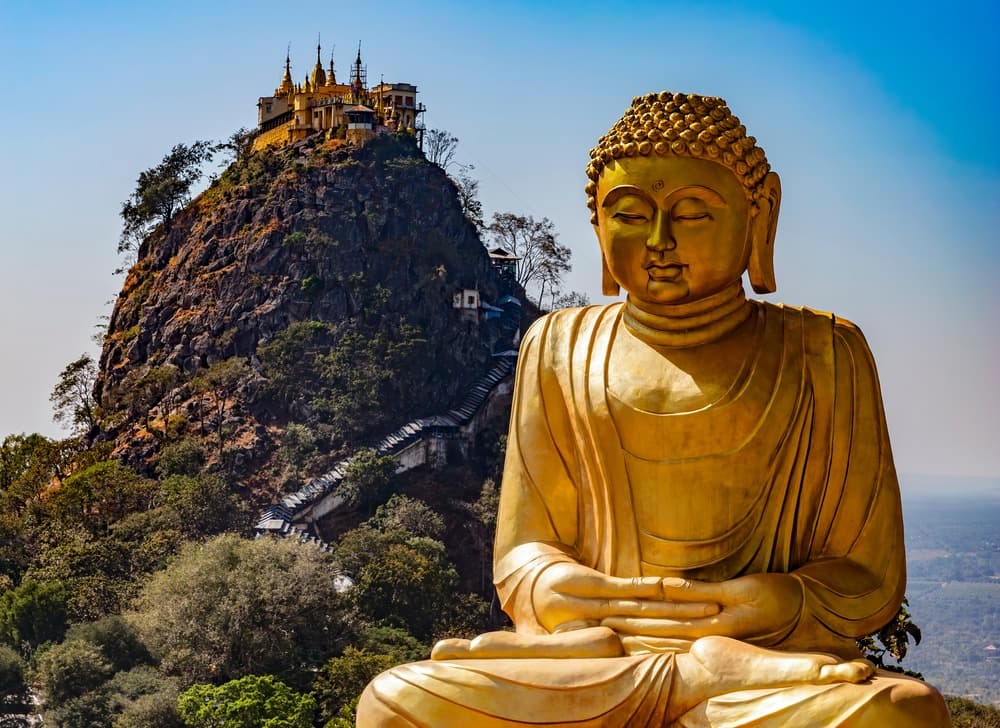
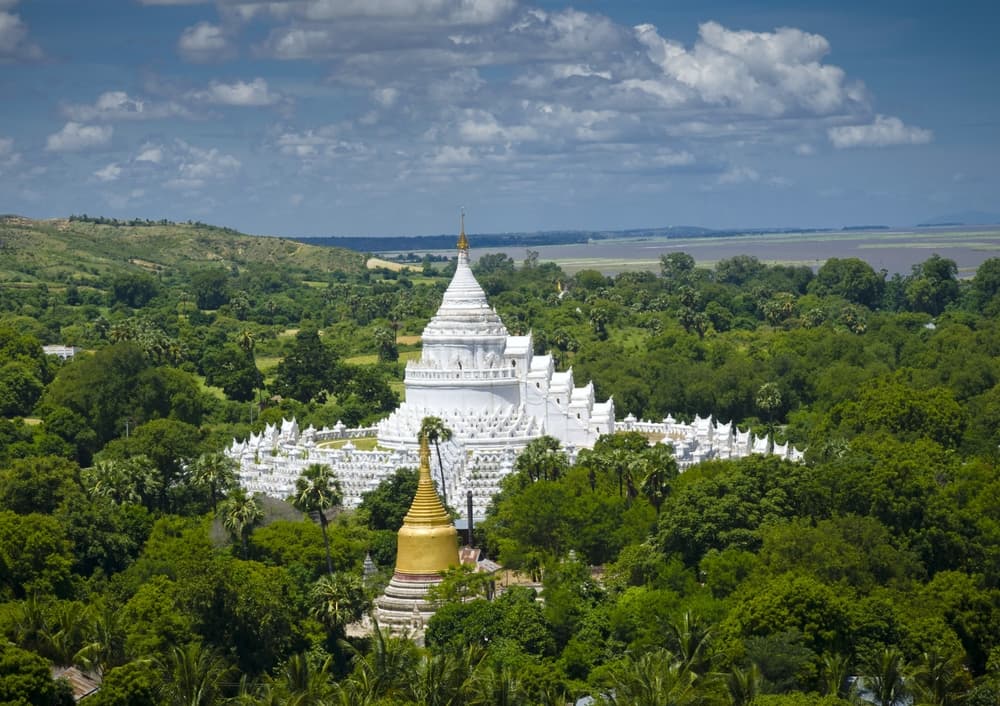
The region retains strong spiritual significance. The Mahamuni Pagoda houses a 4-meter bronze Buddha, covered daily with gold leaf by male devotees, to the point that the statue has lost its original contours. The Shwenandaw Monastery, carved from teak, is the only surviving remnant of King Mindon's wooden palace, dismantled and moved outside the royal compound, which saved it from the 1945 bombardments. To the northwest, on the opposite bank of the river, the Sagaing hills line up nearly 600 white stupas and host approximately 6,000 monks and nuns, making it one of the country's principal centres of Buddhist learning.
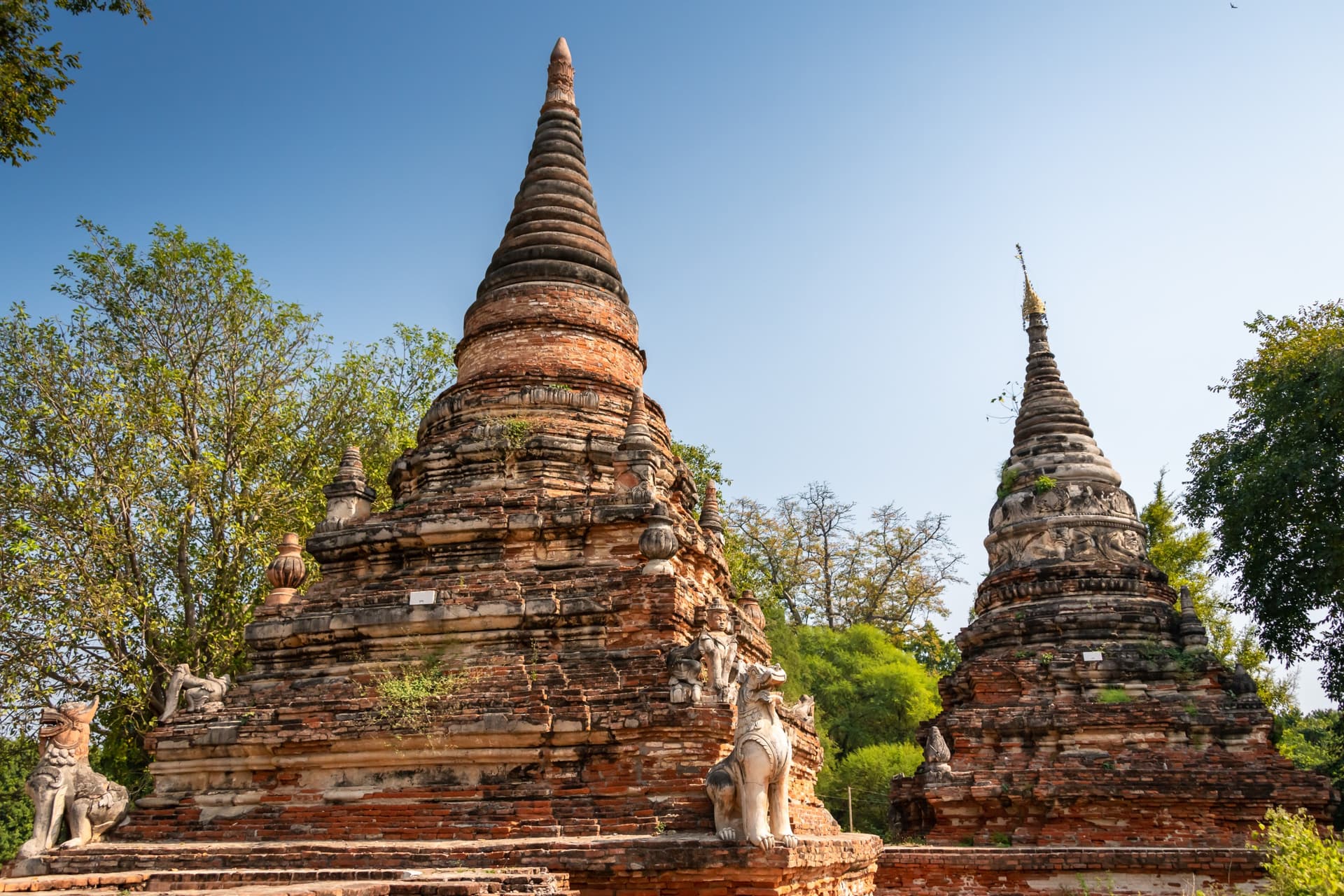
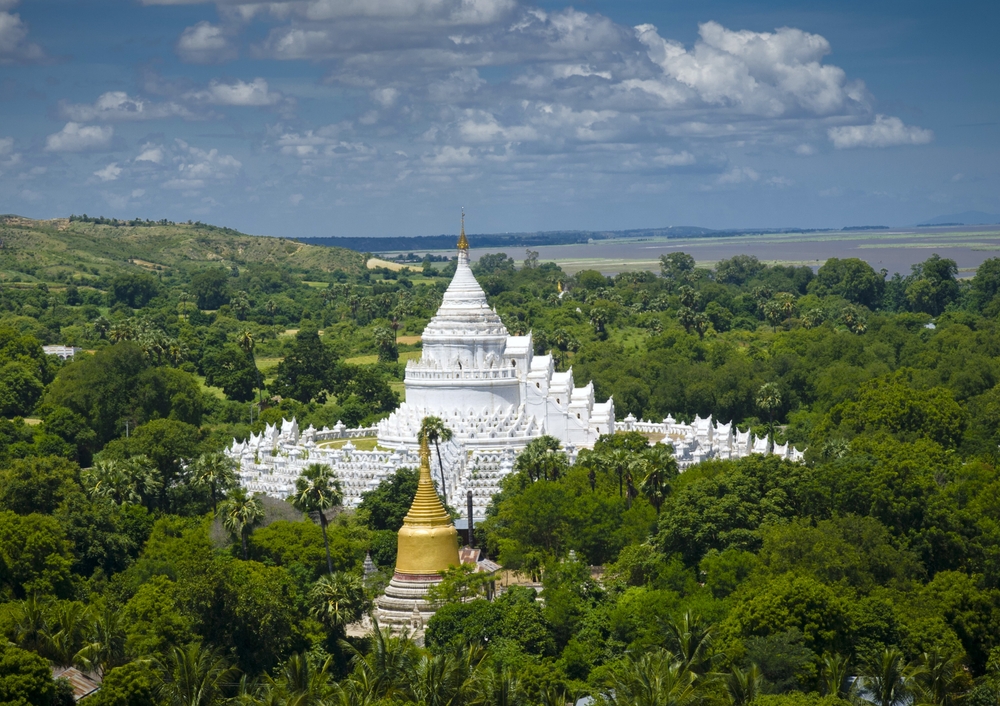
Mandalay's appeal lies less in the city itself than in the crown of ancient capitals surrounding it within a 20-kilometre radius. Amarapura, founded in 1783, is today a southern suburb known for its U Bein Bridge: 1,200 metres of teak beams salvaged from the old palace of Inwa, crossing Taungthaman Lake. The passage is used each morning by monks from Mahagandayon Monastery, which gathers more than a thousand novices for the 10:30 meal. Inwa (Ava), accessible by a short boat crossing, can be toured by horse-cart through rice paddies and ruins: the brick Bagaya Monastery, the leaning Nanmyin Tower, the remains of the royal compound overgrown with banana plants. Mingun, an hour's boat journey upstream on the Irrawaddy, houses the unfinished foundation of Mingun Pahtodawgyi, cracked by the 1839 earthquake, and a 90-tonne bronze bell, the heaviest still in working order in the world.
The regional landscape is that of the central Dry Zone, with annual rainfall limited to 800 mm, sandy soils, crops of sesame, peanuts and sugar palm (toddy). Villages around Sagaing and Monywa still largely live from crafts: wood-fired pottery from Yandabo, lacquerware from Kyaukka, cotton weaving. Local gastronomy moves away from the oilier curries of the south: breakfast here features mohinga, lunch brings mont di (rice vermicelli in fish sauce) in Mandalay, and the salad of fermented tea leaves (lahpet thoke) that comes from the nearby Shan hills.
Mandalay also serves as a springboard to the north and west: embarkation point for boats descending to Bagan in 10 hours, starting point for the road to Hsipaw and Shan country, or towards Monywa and the Po Win Daung caves, carved into the cliff face and covered with frescoes from the 15th and 18th centuries. This crossroads position is why we recommend making it a pivot point rather than a simple urban visit.
Must-See Highlights
U Bein Bridge at Dawn. A walk across the 1,200-metre teak bridge above Taungthaman Lake before 7am, when fishermen cast their nets and monks from Amarapura head to surrounding villages.
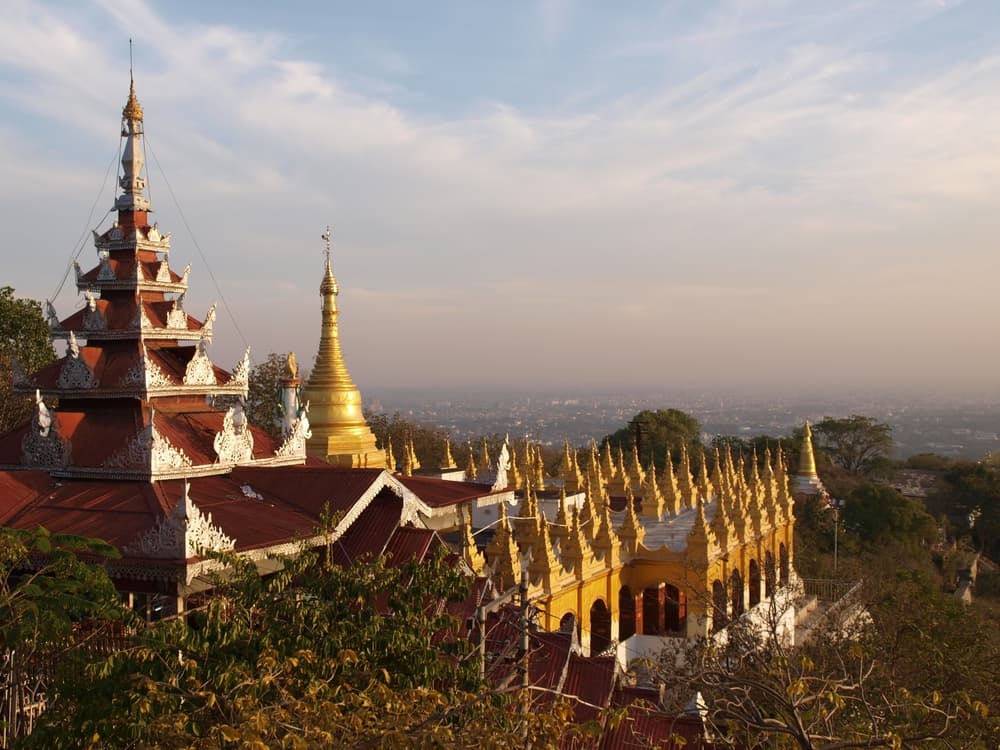
Sagaing Monastic Hills. Climb to the Soon U Ponya Shin Pagoda and its terraces overlooking the bend in the Irrawaddy, then visit a convent of pink-robed nuns in Sagaing village.
Mingun by Boat on the Irrawaddy. An hour's journey upstream from Mandalay's pier to approach the cracked foundation of Bodawpaya's unfinished stupa and strike the 90-tonne bell.
Mandalay Artisan Workshops. Visit the gold-leaf beaters of Kyauk Ka Char quarter and the marble sculptors of Kyauk Sit Tan, where Buddhas commissioned by monasteries across the country are born.
Inwa by Horse-Cart. A two-hour loop through rice paddies and ruins of the former capital (1364–1842), with a stop at Bagaya Monastery in teak, supported by 267 pillars.
When to Visit
The most comfortable window spans November to February: dry days around 28 to 32°C, cool nights dropping to 15°C in December and January, clear skies that showcase Sagaing's white pagodas and the Irrawaddy banks. October and March remain viable but the air thickens already, with temperatures climbing towards 35°C by late morning.
We advise against April and May: the central Dry Zone is one of the hottest regions in the country, with peaks reaching 42°C and a hazy sky that makes daytime visits arduous, especially on the shadeless U Bein Bridge. From June to September, the monsoon is noticeably less intense here than in Yangon (300 to 400 mm cumulative versus over 2,000 on the coast), but afternoons are punctuated by short showers and the Irrawaddy level rises significantly, altering navigation conditions to Mingun and Bagan.
Practical Advice
We recommend dedicating 3 full days to the region: one for the city (Mahamuni, Shwenandaw, workshops, Mandalay Hill at sunset), one for the ancient capitals loop (Amarapura, Inwa, Sagaing) and one for Mingun or an excursion to Monywa. Mandalay International Airport, located 45 km south of the centre, has daily connections to Yangon (1 hour 15 minutes flight) and Bangkok.
Mandalay pairs naturally with the Bagan Plain, either by road (4 to 5 hours) or by boat on the Irrawaddy (9 to 11 hours depending on season), a journey we recommend for travellers not pressed for time. To the east, the city is the logical starting point for Inle Lake and Shan State, by domestic flight or road via Pyin Oo Lwin and Hsipaw. The region suits travellers curious about history and craftsmanship, those drawn to contemplative monastic life, and families provided they plan fractioned days to avoid afternoon heat. Hotel standards are respectable without being luxury: we work with a dozen addresses in the city centre and two guesthouses near Taungthaman Lake for those preferring the periphery.