Mahamuni Pagoda
Mahamuni Pagoda
Mahamuni Pagoda houses one of the most venerated Buddha statues in Birmanie. Covered in layers of gold leaf, it attracts hundreds of pilgrims daily who perpetuate a millennia-old ritual in the heart of Mandalay.
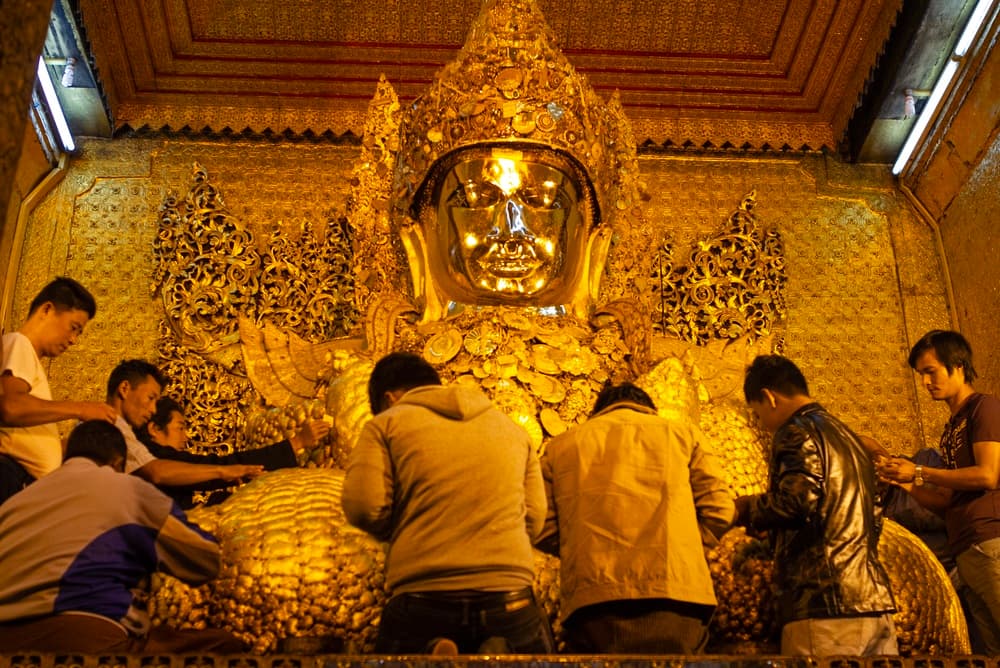
Mahamuni Pagoda, south of Mandalay, houses one of the most revered Buddha statues in Birmanie. Cast in bronze and covered in thick layers of gold leaf applied through centuries of male devotion, it attracts hundreds of pilgrims each day. This active place of worship is both a spiritual sanctuary and a living testament to Burmese Buddhist faith.
Quick practical facts
- Admission: paid for foreign visitors (entrance fee included in the Mandalay Archaeological Zone ticket)
- Recommended duration: 1 to 2 hours
- Dress code: shoulders and knees covered; shoes removed at the entrance
- Access: by taxi, motorbike taxi or bicycle from central Mandalay; approximately 3 km south of the royal palace
- Best time: early morning for the Buddha bathing ceremony
What to see
The main statue stands approximately 3.8 metres high. Centuries of gold leaf applications by male devotees have built up a layer several centimetres thick across the statue's body—only the face, regularly cleaned, retains its fine features. Around the main sanctuary, several galleries display Khmer bronzes brought from Arakan, including figures of guardians and mythical creatures.
History and context
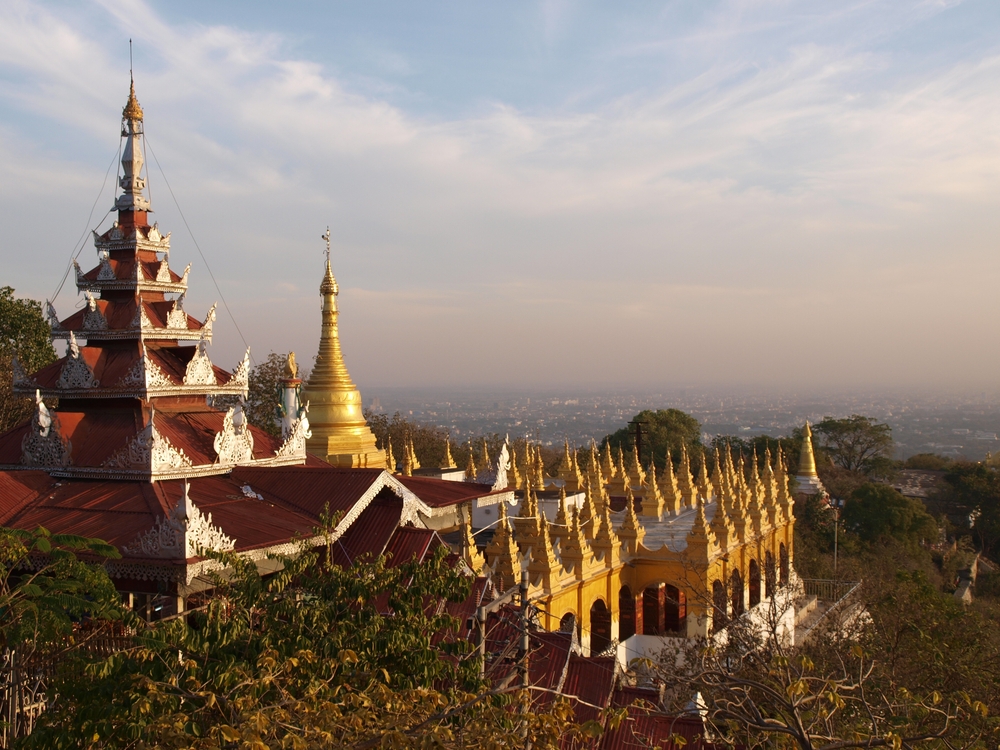
The original statue is associated with the Kingdom of Arakan (present-day Rakhine State) and is traditionally dated to the 2nd century AD. King Bodawpaya had it transferred to Mandalay in 1784 following his conquest of Arakan. The current temple, rebuilt after a fire in 1884, follows classical Burmese architectural style with its gilded spire. Mahamuni literally means "the Great Sage."
Highlights of your visit
The morning bathing ceremony
Each morning before dawn, monks perform a ritual cleansing of the statue's face: tooth brushing, face washing. The ceremony attracts numerous pilgrims and constitutes a moment of intense devotion, bathed in golden, filtered light.
The gold leaf application
Only men are permitted to approach the statue to affix gold leaves to the Buddha's body. Witnessing this continuous ritual, practised for centuries, offers concrete insight into the devotional accumulation that has transformed the statue's silhouette.
The Khmer bronzes
In a side gallery, six bronze sculptures of Khmer origin—including three lions and three human figures—are also covered in gold leaf. Pilgrims rub the parts of these statues corresponding to their ailments, believing in their therapeutic properties.
Etiquette and visiting rules
- Remove shoes and socks before entering the sacred grounds.
- Cover shoulders and knees; sarongs are sometimes available at the entrance.
- Women cannot approach the main statue to apply gold leaves.
- Speak in hushed tones and avoid turning your back to the statue.
- Ask permission before photographing pilgrims in prayer.
Photography tips
Light is most beautiful early in the morning during the bathing ceremony. The side galleries offer angles on the Khmer bronzes without backlighting. The gilded spire photographs well from the outside esplanade in the late afternoon. Photography of the main statue is generally permitted, but check signage on site.
Location and access
Mahamuni Pagoda is located in Mandalay's southern quarter, approximately 3 km south of the Mandalay Royal Palace. It is easily accessible by taxi, motorbike taxi or bicycle. The site is walkable from several central hotels, but the distance and heat make transport advisable. Wheelchair access is limited due to steps and shoeless areas.
Nearby attractions
- Mandalay Royal Palace — vast fortified compound with moat, rebuilt after World War II.
- Mandalay Hill — panoramic viewpoint over the city and Irrawaddy River, accessible via a covered staircase.
- Shwenandaw Monastery — the only teak building to survive from the original royal palace, with remarkable carvings.
- U Bein Bridge — teak bridge stretching over a kilometre across Taungthaman Lake in Amarapura, about twenty minutes to the south.
Frequently asked questions
The ceremony takes place each morning before dawn, usually around 4 am. Arriving early allows you to witness the ritual in a reverent atmosphere before visitor crowds build.
Yes, women have access to the entire complex, including the main hall. However, they cannot approach the statue to apply gold leaves, as this practice is reserved for men.
Shoulders and knees must be covered. Shoes and socks are removed at the entrance to the sacred grounds. Bring clean socks if you're sensitive to warm floors.
Yes. Mahamuni Pagoda fits easily into a day that includes Shwenandaw Monastery and Mandalay Hill. U Bein Bridge in Amarapura is ideally visited in late afternoon for the golden light.
Photography of the statue and galleries is generally permitted. Avoid photographing pilgrims in prayer without consent and respect prohibition signs in certain areas.
The dry season from November to February offers more pleasant temperatures and clear skies. Avoid midday in the hot season (March–May) when temperatures can exceed 40°C.
Interested in this visit?
We can include it in your personalised itinerary.