Mandalay
Mandalay
The last royal capital of Myanmar, Mandalay brings together golden pagodas, teak monasteries and ancient royal cities on the banks of the Irrawaddy.
"On the road to Mandalay," the song where Frank Sinatra takes you, with Rudyard Kipling's lyrics, on a melancholic journey into the heart of Birmanie. Myanmar's last royal capital and holder of the second-largest city in Myanmar, welcome to Mandalay!
This sprawling city is nestled in the plains on the eastern bank of the Irrawaddy River, roughly 600 kilometers from Myanmar's capital, "Yangon." The palaces and pagodas it houses earned it the name "City of Gems." Despite wartime bombardments, Mandalay has reclaimed its former glory. Beyond the cultural wealth and rich history it conceals, the city is also the cradle of Buddhism in Myanmar.
A brief history of Mandalay
Founded in 1857 by King Mindon, Mandalay replaced Amarapura to become the new royal capital of Konbaung, Burma's last dynasty. At that time, the city was known as Yadanabon or Ratanapura, which literally means "the City of Gems."
Mandalay held the title of capital until the arrival of the British on Burmese soil in 1885. Birmanie then became part of the British Raj. Mandalay was forced to cede its place to Yangon.
The Bombardments of January 1941
World War II was catastrophic for Mandalay. Intent on annexing Birmanie, the Japanese bombed the city. This resulted in significant casualties and extensive damage—the bombardments nearly obliterated Mandalay entirely. After three relentless days of bombing, the former royal capital was reduced to ashes. Having lost the war, Birmanie became, between 1942 and 1945, a protectorate of the Japanese Empire.
By the end of World War II, Birmanie glimpsed hope for independence. It officially gained it on January 4, 1948. The reconstruction of Mandalay began shortly after.
Mandalay today
With a population of around 1.5 million, Mandalay is a bustling city. Burmese and Chinese predominantly coexist in Mandalay. It is not uncommon, however, to encounter Indians and Shans. The languages most commonly spoken in Mandalay are Burmese and Mandarin.
With a strategically advantageous geographical position, Mandalay is considered Myanmar's economic center. It simultaneously serves as the commercial hub of Upper Birmanie and the cultural center of the entire country.
Mandalay, a Buddhist metropolis
Mandalay is the heart of Buddhism in Myanmar. The daily lives of its inhabitants revolve around Buddha and his teachings. Visiting the former capital will surely deepen your understanding of this religion's importance to its people. The city and its surrounding hills are brimming with pagodas and monasteries. Monks, young novices, and nuns can be seen on every street corner.
What to see in Mandalay?
Ready to discover this treasure of the ancient Burmese kingdom? Mandalay boasts several must-see attractions. Most monuments are Buddhist structures, reflecting the religious devotion of its inhabitants. Beyond these architectural marvels, don't miss the Zegyo Market and puppet shows.
Maha Myat Muni Pagoda
This Mandalay temple serves as a major pilgrimage site for Buddhists. Within its walls stands a magnificent golden Buddha statue, four meters in height.
Shwenandaw Monastery
This monastery is a relic of Birmanie's royal era. Originally built in Amarapura, it was relocated to Mandalay by King Mindon. When Mandalay came under attack, the royal palace was damaged. Yet this building was miraculously spared the bombs dropped by the Japanese. This teak monastery is adorned with intricate carvings of mythical creatures and spirits revered by Burmese people (the Nats).
Mandalay Hill
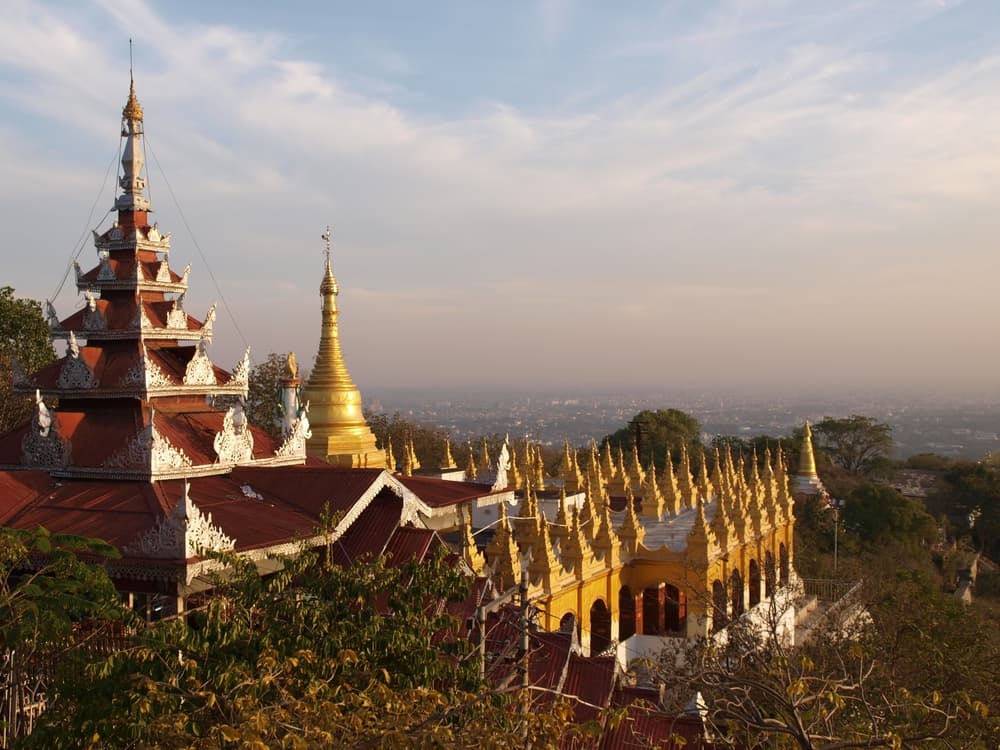
This 224-meter-high hill is home to numerous stupas and Buddhist monasteries. Located in the northeastern section of the city center, Mandalay Hill has been a major pilgrimage site for Buddhists for nearly two centuries. At its summit stands the Sutaungpyei Pagoda. Four covered staircases on each side of the hill provide access. Those with mobility challenges can use an elevator or escalator.
Kuthodaw Pagoda
Dating to the Konbaung dynasty, this collection of Buddhist temples houses the world's largest book. With 729 stupas, each containing a page of the Pali Buddhist canon, Kuthodaw welcomes Burmese families for picnics. Kuthodaw Pagoda sits at the base of Mandalay Hill.
Climate in Mandalay
Mandalay experiences a desert climate. Heat is present year-round, with temperatures reaching a record 45°C in May 2010. May is the hottest month, while January brings milder temperatures. The average temperature is around 28°C.
March is the driest month of the year. The rainy season spans from May through October, with average precipitation of 418 mm.
The period between December and February is ideal for visiting Mandalay.
By plane
Mandalay has two airports: Mandalay International Airport and Mandalay Chanmyathazi Airport. Flying is the fastest way to reach the city.
From Bagan, one hour is enough to reach Mandalay. Yangon to Mandalay requires a flight of one hour and 20 minutes. The flight from Kalaw to Mandalay takes just 35 minutes.
By train
Train travel is also a wonderful option for reaching Mandalay. You can depart from Bagan, Yangon, or Kalaw.
By bus
The bus is the most affordable transport option for traveling. Numerous bus routes connect:
- Yangon – Inle Lake – Mandalay
- Hpa-An – Mandalay
- Bagan – Mandalay
- Kalaw – Mandalay
By boat
Boat travel connects Bagan to Mandalay via the Irrawaddy River. Travelers have three options: the eco boat, the slow boat, and the fast boat.
- The eco boat
This option can take up to a full day, but allows you to interact with local residents.
- The slow boat
A luxury cruise experience! Slow boat journeys require 3 to 6 days. It's the ideal choice if you want to enjoy a stay aboard a 5-star vessel. However, the slow boat is significantly more expensive than other options.
- The fast boat
This refers to a semi-cruise boat. Journey duration ranges from 7 to 10 hours. Often favored by tourists, this option offers greater comfort.
Mandalay abounds with two-wheeled vehicles, particularly bicycles and motorcycles. For getting around the city center, these two options are preferred over other transport methods like buses.
Attractions in Mandalay
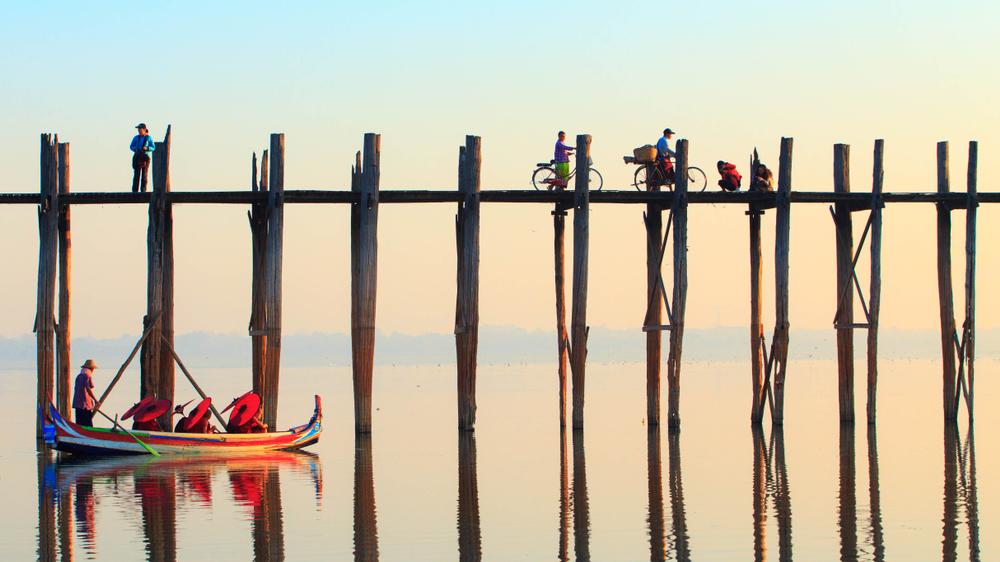
Pont U Bein
Le pont U Bein enjambe le lac Taungthaman à Amarapura, à une vingtaine de kilomètres au sud de Mandalay. Construit entièrement en teck, il s'étire sur près d'un kilomètre deux cents
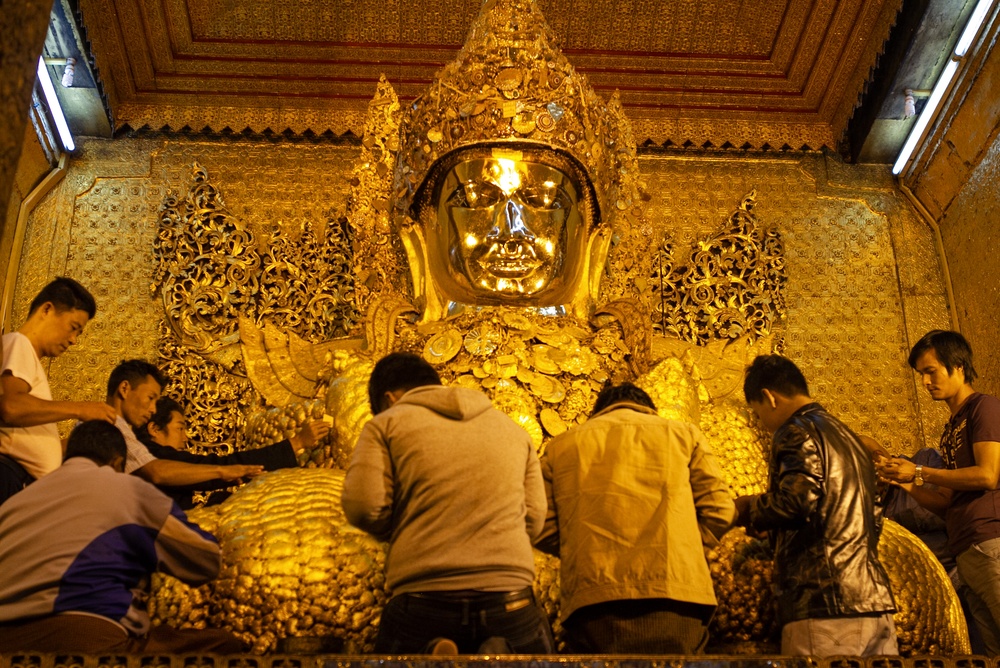
Pagode Mahamuni
La pagode Mahamuni, au sud de Mandalay, abrite l'une des statues de Bouddha les plus vénérées de Birmanie. Coulée en bronze, recouverte de couches épaisses de feuilles d'or
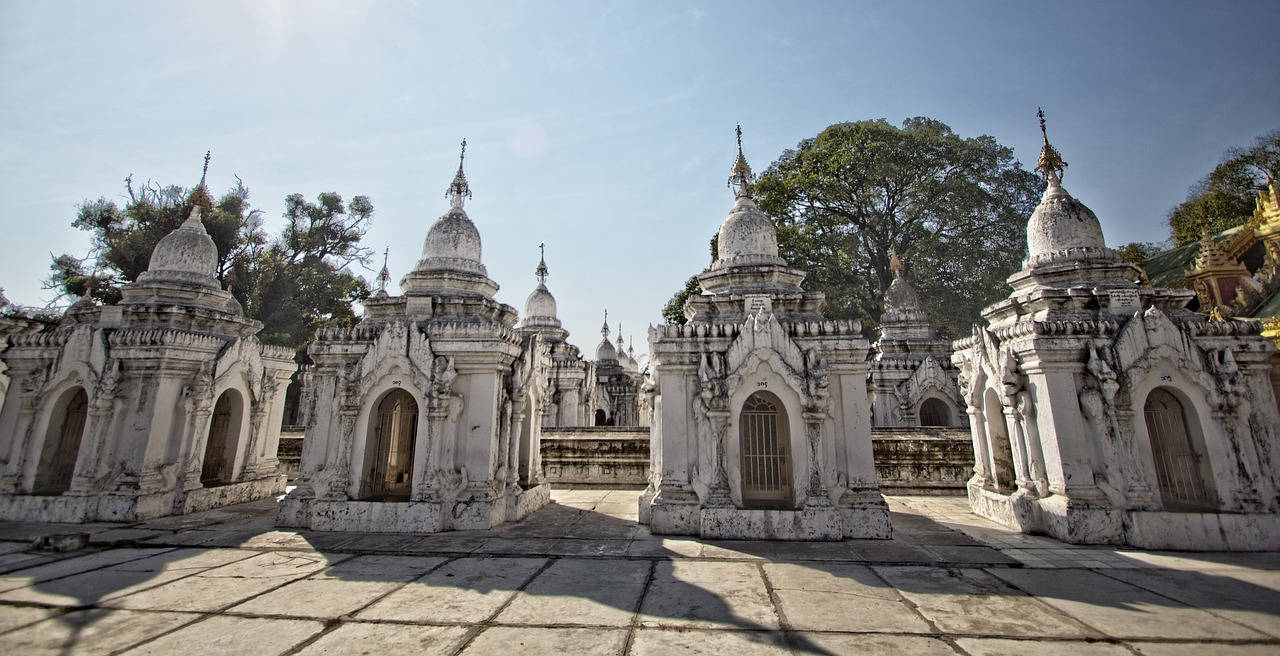
Pagode Kuthodaw
Au pied de la colline Mandalay, la pagode Kuthodaw abrite ce que l'on appelle souvent le plus grand livre du monde : 729 stèles de marbre blanc gravées du canon bouddhiste Theravada complet.
Want to discover this destination?
Our local advisors design your tailor-made trip.