Inle Lake
Inle Lake
Fishermen balancing on one leg, floating gardens, teak monasteries and a rotating market: Inle Lake is one of the living hearts of Myanmar.
A perfect marriage between natural landscape and cultural richness, Inle Lake is a unique destination for discovering Myanmar. Spanning 117 km², Inle offers a surprising and deeply pleasant natural setting. This gem, nestled at the heart of the mountains, sits in the heart of Myanmar, in Nyaung Shwe, in the southern part of Shan State.
Surrounded by pagodas and floating gardens, this natural wonder of Myanmar is brimming with countless tourist attractions. Inle Lake also stands out for its biodiversity. With its hot springs, this paradisiacal basin was designated a UNESCO Biosphere Reserve in 2015.
A brief history of Inle Lake
History tells us that an emperor from the Tavoy region wished to establish his kingdom in the plains of the region around 1350. However, this territory was already occupied by Shan farmers. The sovereign had no choice but to settle his people, the Inthas, on the shores of the lake.
Inle Lake today
Inle Lake is home to many ethnic groups of Myanmar: the Shan, the Danu, the Pa-O, the Kayah, the Bamars, the Tangyuo, the Danaw, the Burmese and primarily the Inthas. Their villages stand out for their wooden houses or woven bamboo structures, built on stilts.
Inlé, the lake of four villages, is renowned for fishing, agriculture and craftsmanship. The lake's products sustain approximately 100,000 people. Inlé also benefits from tourism for its development.
Agriculture on floating gardens or ye-chan
Floating gardens are one of the most striking features of Inle Lake. An ingenious idea born from the Inthas, who knew how to use what they had to thrive: the basin itself. Serving to cultivate vegetables and flowers, these floating gardens are essentially constructed from thick layers of water hyacinths and other plants, bound together with mud. Bamboo stakes maintain their stability to prevent the crops from drifting.
Developed during the 20th century, this agricultural technique has become today a defining feature of the Intha people and of Myanmar as a whole.
The art of fishing on Inle Lake
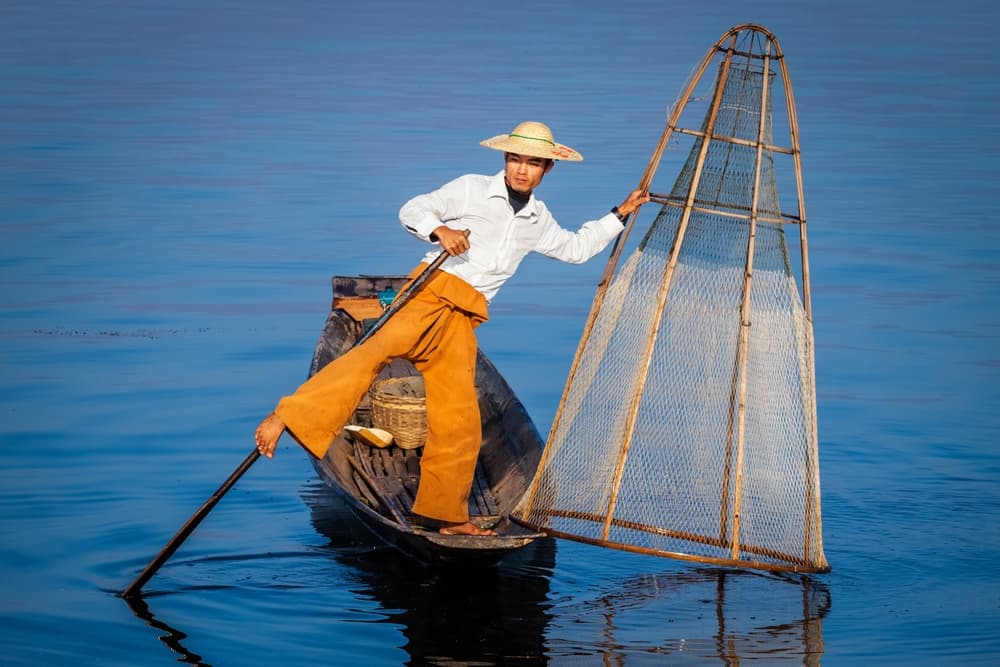
The fishing technique used by the Inthas is highly authentic. It consists of striking the water's surface with oars to drive fish into the net. The net is slipped into the water with both hands. Throughout the operation, the fisherman maintains his balance on a single leg, rowing with the other leg while remaining standing to move the boat.
Points of interest around Inle Lake and its surroundings
Soothing and authentic, Inle and its surroundings will surely make your Myanmar journey unforgettable. Discovering different ethnic groups, a way of life distinctly Burmese, a trip to Inle is a must-do. Inle is a destination of dreams, and here are some sites you absolutely should visit:
Phaung Daw Oo Temple
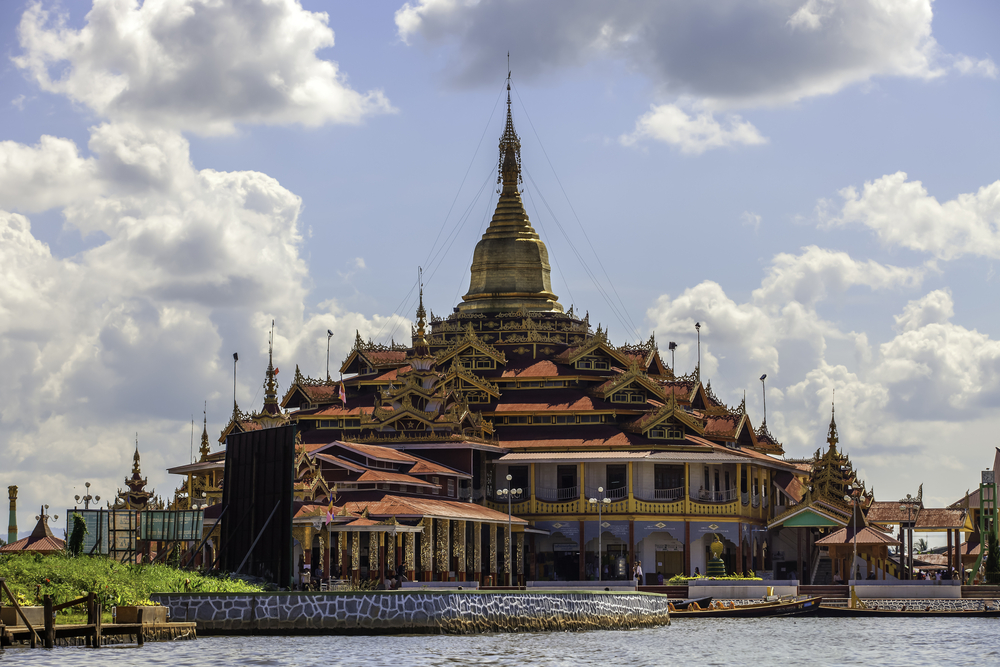
This sacred pagoda is a Buddhist site located in the central part of the lake. Decorated with countless gold leaves, this religious temple houses five Buddha statues. To reach Phaung Daw Oo, you must take a boat.
Nga Phe Chaung Monastery
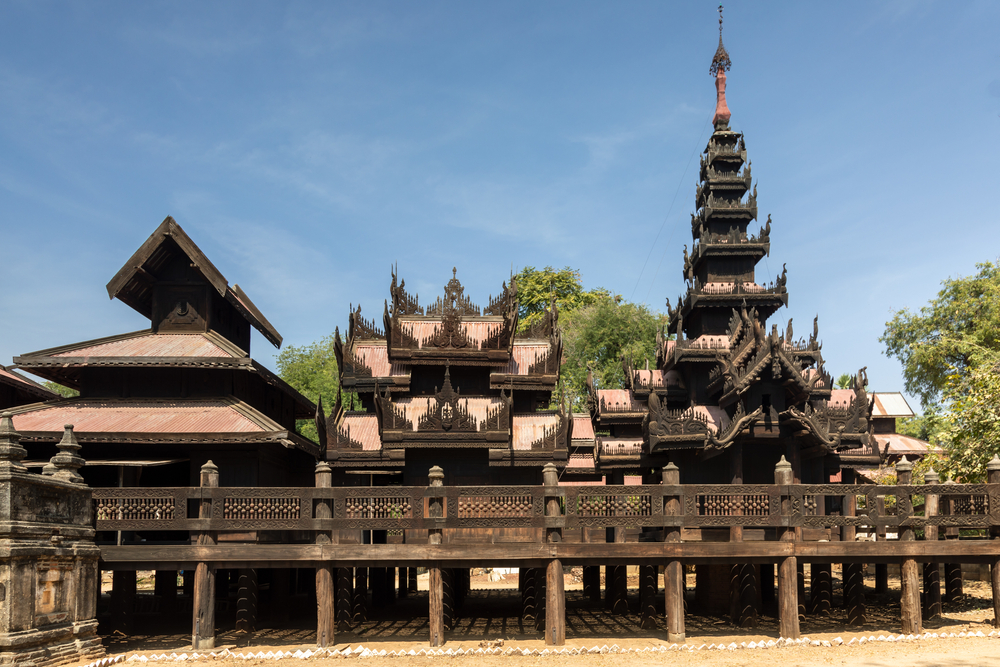
Also known as the "jumping cats monastery", Nga Phe Chaung benefits from its beautiful location amid floating gardens. This teak pagoda is the largest and oldest on Inle Lake. You can witness an unusual spectacle of jumping cats, directed by trainer monks.
The local market or Mine Thauk market
Also known as the "five-day market", this is an event that rotates among five villages around Inle Lake. The products are highly varied since vendors are the ethnic minorities that dominate all four corners of the region.
The floating villages
These traditional villages, one of the most well-known being Nampan, are formed by wooden houses built on stilts and floating gardens. The view offers an original and stunning setting.
Shwe In Dein Pagoda
This site contains significant monumental remains from Myanmar. Shwe In Dein indeed houses more than a thousand ancient Buddhist pagodas.
Nyaung Ohak Temples
Featuring complex architecture, the Nyaung Ohak site is characterized by ancient pagodas, and chinthes, Naga serpents as well as other mystical sculptures. These archaeological masterpieces are unmissable!
When should you visit?
Benefiting from a tropical savanna climate with dry winters, Inle Lake does not receive much rain during winter. Summer, from June to October, is rather rainy. At 885 meters altitude, the lake experiences milder temperatures than other regions. The average temperature is 23.7°C with average precipitation of 1,716 mm. The best time to visit Inle is in winter, especially in February. At this time, temperatures are pleasant.
By plane
Want to visit Inle Lake? The most practical and obviously fastest way is to take a domestic flight. There are flights connecting Mandalay or Yangon with the lake region. The airport is located about 30 km from Inle, in the small town of Heho, near Kalaw. Airlines serving this region are Air Bagan, Yangon Airlines and Mandalay Airlines. Upon arrival at Heho terminal, you can reach Inle Lake by taxi. One hour is sufficient for this final leg.
By bus
Slightly slower but quite comfortable, the bus is the most affordable and most common means of transport to reach Inle Lake.
- Bagan – Inle Lake: The bus passes through Kalaw and Nyaung Shwe before reaching Inle Lake. From Bagan, expect approximately 8 hours to reach the lake.
- Yangon – Inle Lake: The journey takes about 12 hours
- Mandalay – Inle Lake: The journey takes approximately 8 hours.
By boat
To reach this large freshwater lake, it is also possible to travel by water. Rich in discoveries, cruises to Inle are numerous, departing from either Bagan, Yangon or Mandalay. The journey can last several days. An experience absolutely worth trying!
By trek
Despite the considerable distance between Kalaw and Inle Lake (38 km as the crow flies), many tourists love to go hiking there. You should allow several days to wind along the paths connecting the two villages.
Of course, boats and pirogues are the most commonly used means of transport to visit Inle Lake. Inhabitants have navigated with traditional boats for generations. Currently, many prefer to use more modern vessels, particularly motorized boats.
Want to discover this destination?
Our local advisors design your tailor-made trip.