Sule Pagoda
Sule Pagoda
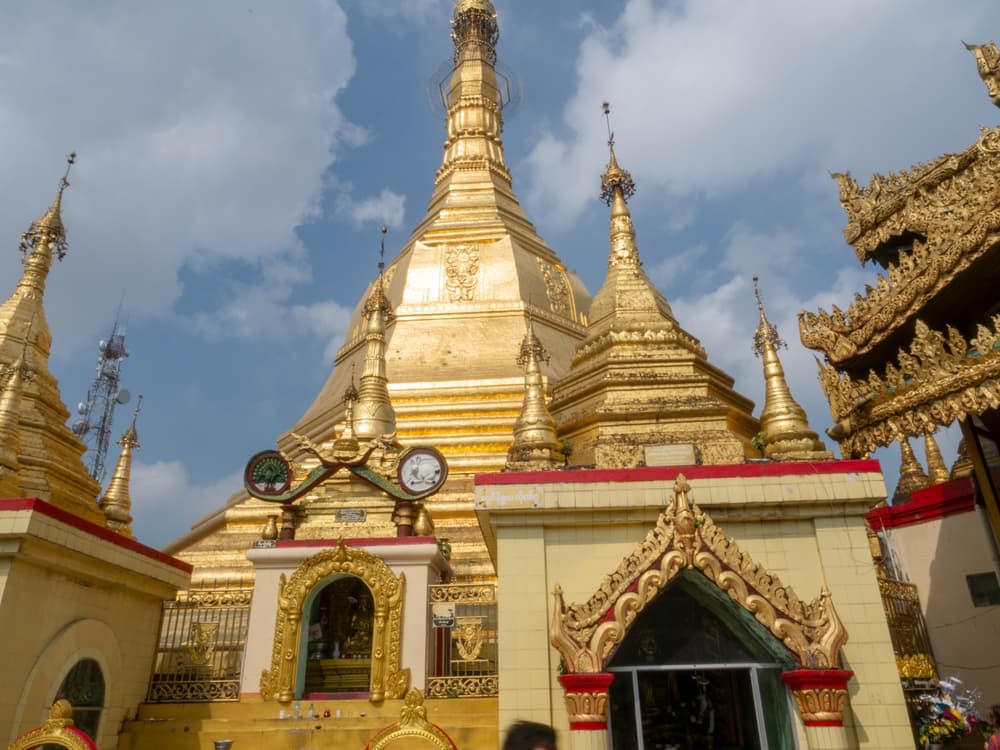
In the center of Yangon, Sule Pagoda is a golden octagonal stupa standing 44 meters tall, over two millennia old according to Buddhist tradition. An active place of worship and a historic landmark of the colonial city.
In the heart of Yangon, Sule Pagoda rises 44 meters above a bustling roundabout. Over two millennia old according to Buddhist tradition, it served as a geographical landmark when the city's colonial grid was laid out. An active place of worship, it attracts both Burmese devotees and foreign visitors, offering a striking contrast between sacred architecture and urban vitality.
Quick practical info
- Entrance: paid entry for foreign visitors (fee in kyats, payable on-site)
- Dress code: shoulders and knees must be covered; sarongs are available at the entrance
- Shoes: must be removed before entering the compound
- Recommended duration: 30 to 45 minutes
- Access: in the city center, walkable from most colonial district hotels
What to see
The golden octagonal stupa dominates the intersection of Sule Pagoda Road and Mahabandoola Road. The circular compound contains altars, Buddha statues, and meditation spaces. Flower and candle vendors, along with those selling offerings, set up around the immediate perimeter. At night, the gilded structure glows in striking contrast to the city's neon lights.
History and context
Buddhist tradition dates the founding of Sule Pagoda to over 2,500 years ago, predating the establishment of Rangoon itself. It is said to have housed a sacred relic—strands of the Buddha's hair. During British colonization, urban planners made the pagoda the zero point of the city's grid layout. It also served as a gathering place during political uprisings in 1988 and 2007.
Highlights of your visit
The octagonal stupa
The octagonal shape is rare in Burmese Buddhist architecture. Each of its eight faces corresponds to a day of the week (Wednesday being divided in two), allowing devotees to pay respect at the altar aligned with their day of birth.
The devotion of the faithful
In late afternoon and evening, devotees flock here to pour water over Buddha statues, light candles, and pray. This atmosphere of daily devotion is one of the most authentic aspects of the visit.
Urban panorama from the compound
From the outer terrace, you observe the ceaseless flow of traffic around the roundabout, colonial buildings, and modern high-rises—a view that encapsulates Yangon's hybrid identity.
Etiquette and visiting rules
- Remove your shoes and socks at the entrance to the compound.
- Dress modestly: shoulders and knees must be covered.
- Speak softly and avoid loud behavior in prayer areas.
- Do not turn your back to Buddha statues when posing for photographs.
- Circulate clockwise around the stupa, in accordance with Buddhist tradition.
Photography tips
The golden light of late afternoon enhances the pagoda's gilding. In the evening, illuminations create interesting reflections on wet ground after rain. From the outer pavement, frame the pagoda with buses and crowds to emphasize the sacred/urban contrast. Photographing devotees at prayer requires discretion and prior permission.
Location and access
Sule Pagoda stands at the intersection of Sule Pagoda Road and Mahabandoola Road in Yangon's colonial center. It is walkable from Mahabandoola Square and Yangon City Hall, both a few minutes away. Urban buses stop in the immediate vicinity. Accessibility for people with reduced mobility is limited due to steps and uneven ground within the compound.
Nearby attractions
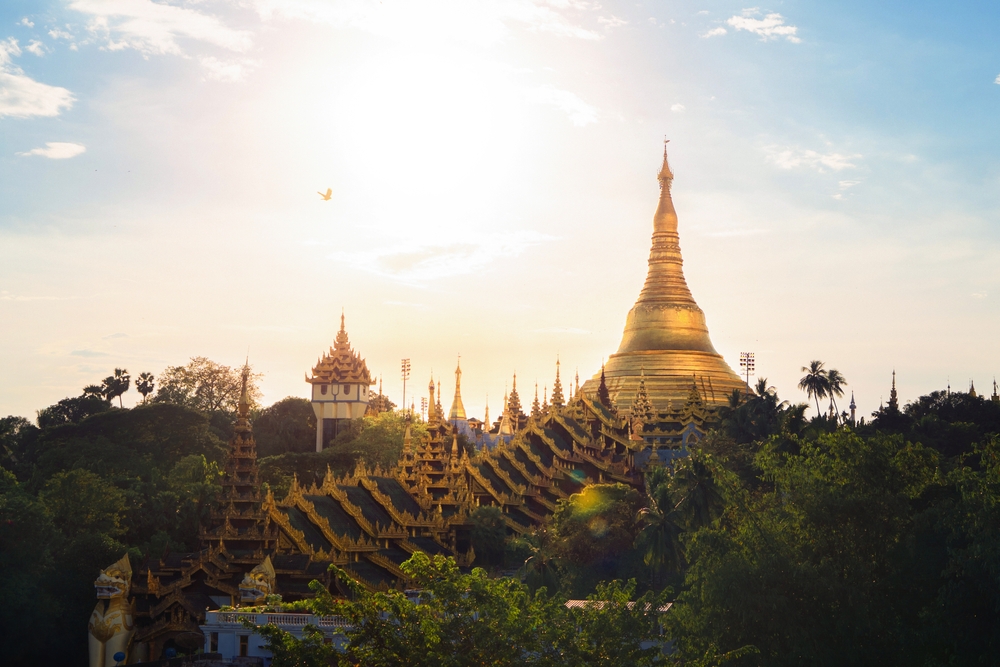
- Shwedagon Pagoda — Yangon's largest pagoda, essential for understanding Burmese Buddhism.
- Mahabandoola Square — colonial esplanade with the Independence Monument, just steps away.
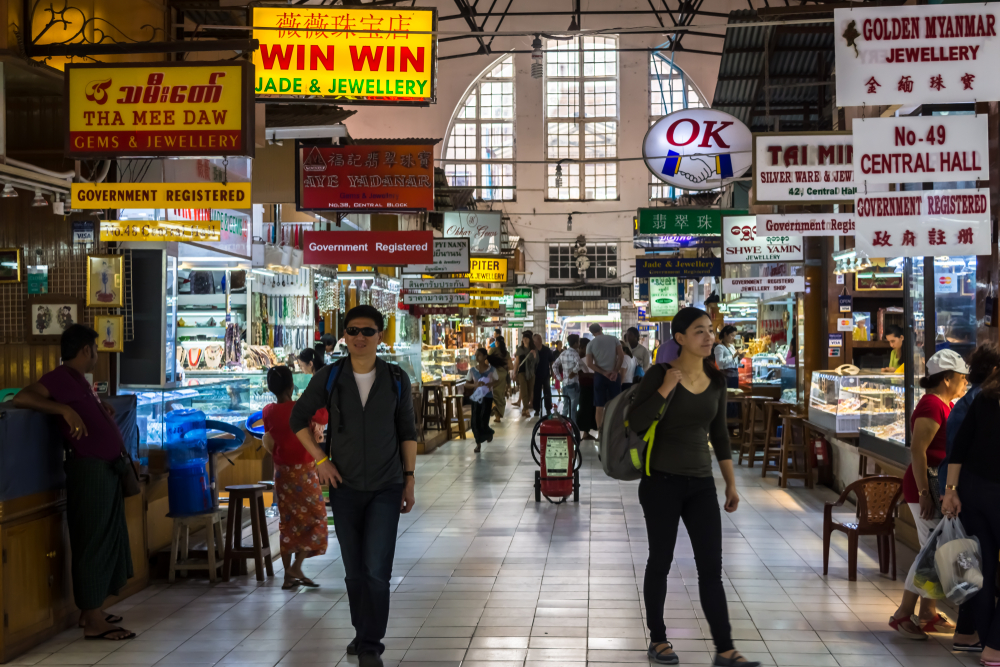
- Bogyoke Market (Scott Market) — large covered market offering Burmese crafts, jewelry, and textiles.
- Colonial Quarter of Yangon — collection of 19th-century British buildings to explore on foot.
Frequently asked questions
No, the pagoda is accessible without reservation. Simply pay the entrance fee on-site.
Shoulders and knees must be covered. Sarongs are typically available at the entrance if your clothing is not appropriate. Shoes must be removed.
Yes. Sule Pagoda is a quick visit (30 to 45 minutes) and can easily precede or follow a visit to Shwedagon Pagoda, accessible by taxi or bus from the center.
Late afternoon offers favorable light for photography and the devotion of the faithful is at its peak. In the evening, the illuminated stupa creates a special atmosphere.
Access is challenging: the compound has steps and uneven ground. No specific accessibility accommodations are signaled.
Photography is generally permitted within the compound. Be discreet near prayer areas and ask devotees for permission before photographing them.
Interested in this visit?
We can include it in your personalised itinerary.