Shwedagon Pagoda
Shwedagon Pagoda
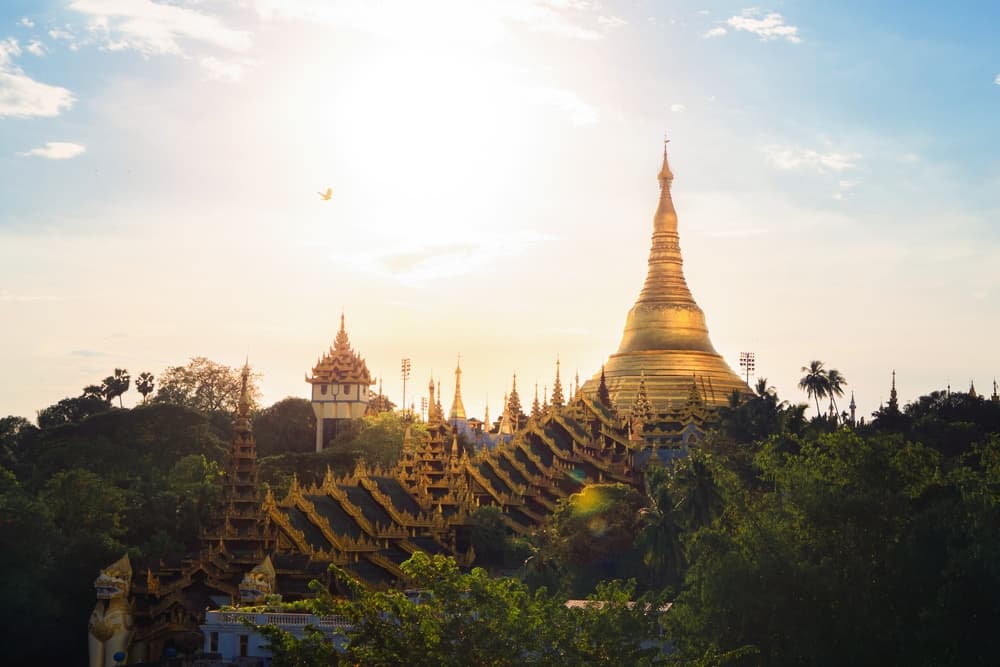
Overlooking Yangon from Singuttara Hill, Shwedagon Pagoda is the most venerated Buddhist site in Myanmar. Its gold-clad stupa, pavilions, and rituals make it an extraordinary visit.
Shwedagon Pagoda dominates Yangon from Singuttara Hill, rising some 40 meters above the city. Its central stupa, clad in gold leaf and crowned with a hti jeweled with thousands of diamonds and rubies, is the most venerated Buddhist site in Myanmar. Pilgrims, monks, and visitors converge here at all hours, making it as much a living space of devotion as a remarkable architectural monument.
Quick Practical Info
- Entrance: paid admission for foreigners (in kyats or dollars, paid at one of four main entrances)
- Access: four cardinal entrances with covered staircases; elevators available on east and west sides for people with reduced mobility
- Dress code: shoulders and knees covered; shoes and socks removed at entrance
- Recommended duration: 1.5 to 2.5 hours depending on your level of interest
- Accessibility: elevators at east and west entrances; main platform largely flat
What You'll See
The main stupa rises to approximately 98 meters. Its surface is covered with genuine gold plates, offered over centuries by kings, individuals, and communities. Around the central stupa, the circular platform hosts dozens of pavilions, satellite stupas, Buddha statues, and votive bells. Each cardinal direction houses a Buddha of the week, allowing the faithful to pray before the one corresponding to their day of birth.
History and Context
Buddhist tradition attributes the founding of the site to over 2,500 years ago, making it one of the oldest pagodas in the world. Historians date the first documented constructions between the 6th and 10th centuries. The stupa was raised and gilded several times by Mon and Burmese kings. Queen Shinsawbu, in the 15th century, is notably credited with donating her weight in gold to cover the stupa. Earthquakes damaged the site multiple times; the current structure reflects successive reconstructions through the 18th century.
Highlights of Your Visit
The Central Stupa at Sunset
The raking light of late afternoon sets the gold leaf ablaze. It's also when pilgrim numbers peak, creating an atmosphere of particularly intense devotion.
The Planetary Pavilions
Eight prayer stations surround the stupa, one for each day of the Burmese week (Wednesday is divided in two). Each devotee pours water over the statue corresponding to their day of birth—a quiet yet omnipresent ritual.
The Great Bell of Maha Tissada
Cast in the 18th century, this massive bronze bell is among the country's largest. The British attempted to remove it in 1824; it fell into the river and was recovered by the Burmese themselves.
Dawn and Monks in Prayer
From opening, saffron-robed monks recite prayers around the stupa. The atmosphere is calm, the light soft—a striking contrast to the frenzy of the city below.
Etiquette and Visiting Rules
- Shoes: must be removed at entrance, including socks—lockers are available
- Dress: shoulders and knees covered for all; sarongs can be rented or purchased on site
- Behavior: speak quietly, never point your feet toward statues or monks, do not turn your back to the main stupa during prayers
- Direction of circulation: circle the stupa in a clockwise direction (Buddhist convention)
- Photography: permitted in most areas; avoid photographing devotees in prayer without discretion
Photography Tips
The golden light of late afternoon is ideal for photographing the stupa—the gold reflects the setting sun spectacularly. Dawn offers softer light and fewer crowds. For architectural details (mosaics, statues, bells), a standard lens suffices. Avoid using flash inside prayer pavilions.
Location and Access
Shwedagon Pagoda sits on Singuttara Hill in the Dagon quarter, north of Yangon's city center. The four entrances (north, south, east, west) are accessible by taxi, trishaw, or on foot from downtown. The south entrance, on Shwedagon Pagoda Road, is the busiest. A taxi from the city center typically takes less than twenty minutes outside peak hours. Elevators at the east and west entrances facilitate wheelchair access to the main platform.
Nearby Attractions
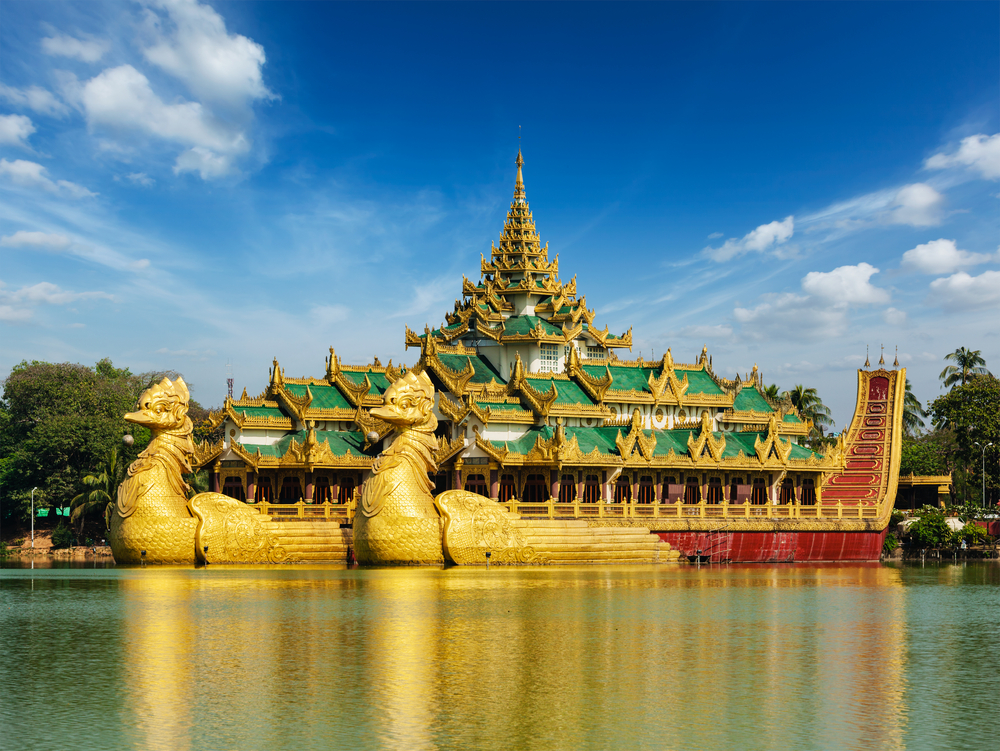
- Kandawgyi Lake and Park — artificial body of water with views of the stupa's reflection, ideal for a stroll after your visit.
- Yangon National Museum — Burmese royal collections, including the Lion Throne, a few kilometers south.
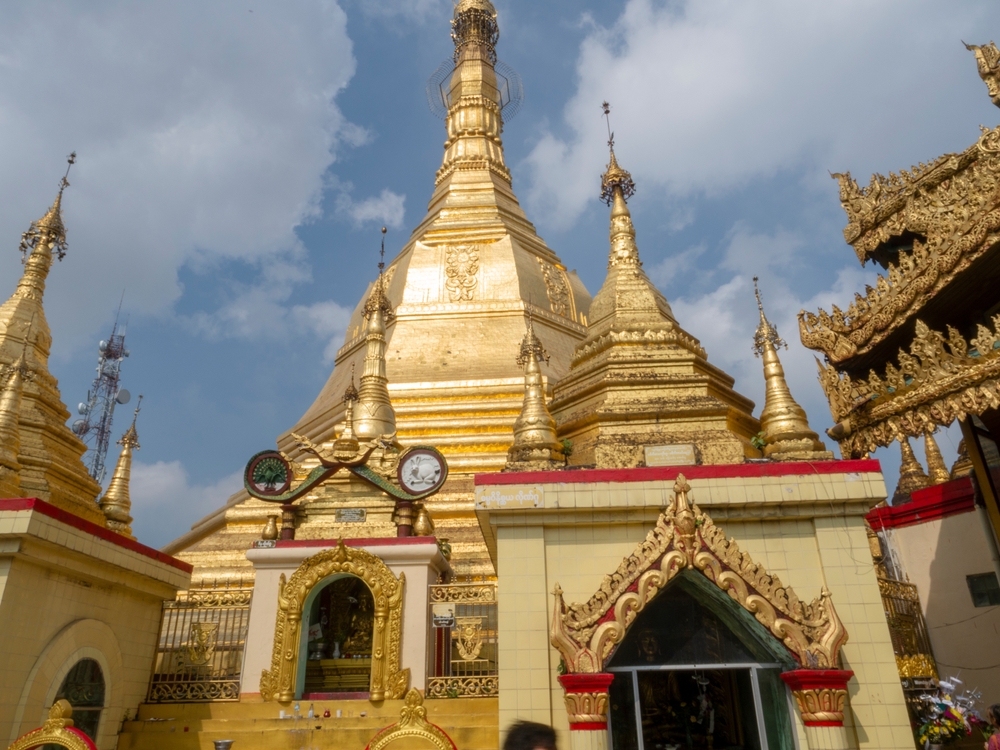
- Sule Pagoda — octagonal stupa at the heart of the colonial center, a landmark of old Yangon.
- Colonial Quarter of Yangon — 19th-century British architecture, markets, and lively streets to explore on foot.
Interested in this visit?
We can include it in your personalised itinerary.