Shwemawdaw Pagoda
Shwemawdaw Pagoda
Standing 114 metres high, Shwemawdaw Pagoda is one of Myanmar's most venerated pilgrimage sites. In Bago, two hours from Yangon, it blends a thousand years of Mon and Burmese history with vibrant daily devotion.
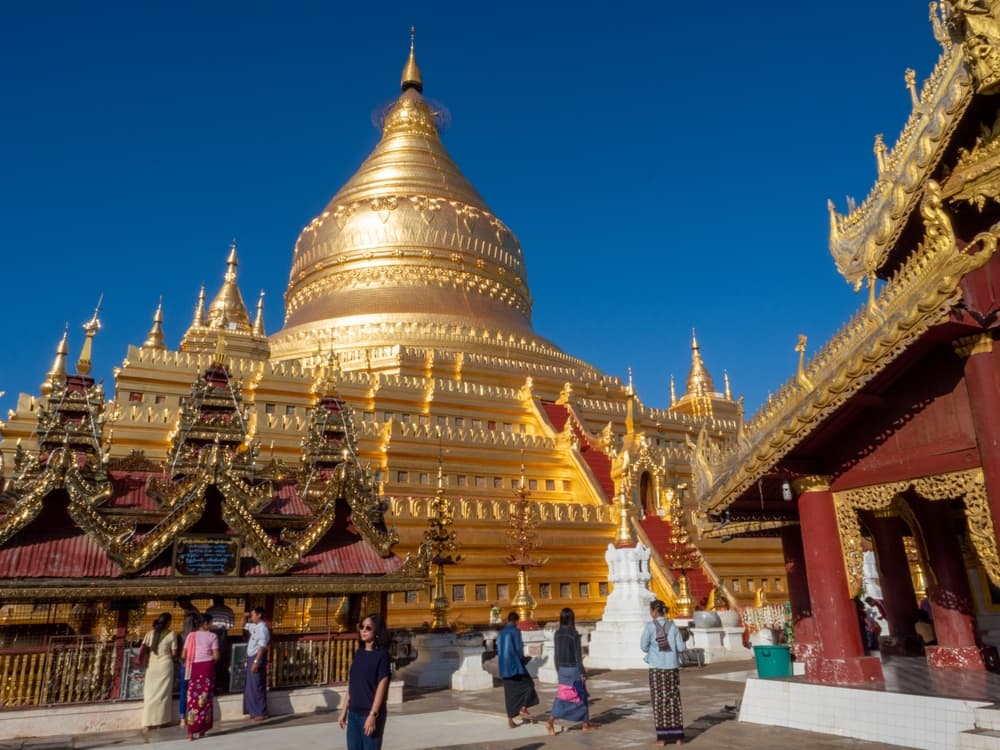
Shwemawdaw Pagoda rises above Bago with its golden stupa, one of Myanmar's tallest at approximately 114 metres. Venerated for over a thousand years, it is said to enshrine two strands of hair from Buddha Gautama. For Bago's inhabitants and pilgrims throughout the country, this site remains a place of living devotion, far more than a static monument.
Quick reference
- Admission: paid entry for foreign visitors (Bago archaeological zone)
- Dress code: shoulders and knees must be covered; shoes and socks must be removed before entering
- Suggested duration: 45 minutes to 1.5 hours depending on your interest in architectural details
- Access: Bago is located approximately 80 km northeast of Yangon, accessible by bus, train or car
What to see
The central stupa, entirely covered in gold leaf, rises from a circular terrace surrounded by pavilions, statues of nats (spirits) and smaller satellite stupas. Votive bells line the covered walkways. At the base of the stupa, fragments from the old spire — toppled by the 1930 earthquake — are displayed as witnesses to the site's history.
History and context
Tradition attributes the site's founding to the 3rd century BCE, during the reign of King Tissa. The stupa was enlarged and heightened several times by Mon and Burmese kings. The 1930 earthquake destroyed the summit spire; reconstruction, completed in 1954, brought the total height to 114 metres, surpassing Yangon's Shwedagon. The ruins of the former spire, preserved on site, serve as a reminder of this catastrophe.
Highlights of your visit
The golden stupa viewed from the terrace
As you ascend to the main terrace, the stupa fills your entire field of vision. The gilded surface captures light differently depending on the hour: warm and coppery at sunset, almost white in full midday sun.
Fragments of the former spire
A pavilion houses the debris of the original spire, which collapsed during the 1930 earthquake. These gilded masonry blocks, resting on the ground, give a concrete sense of the structure's scale and the earthquake's violence.
The activity of pilgrims
Weekdays and weekends alike, Burmese families come to pray, offer flowers and apply gold leaf to the smaller stupas. This daily devotion is among the site's most authentic experiences.
Etiquette and visiting rules
- Remove shoes and socks at the entrance to the sacred grounds.
- Dress modestly: shoulders and knees must be covered.
- Avoid pointing your feet toward the stupa or Buddha images.
- Speak softly in prayer areas; ongoing ceremonies deserve respect.
- Ask permission before photographing pilgrims in prayer.
Photography tips
The golden light of late afternoon is ideal for photographing the stupa: reflections on the gold are warmest at this hour. For a complete framing of the stupa from ground level, step back to the entrance walkways. The fragments of the former spire offer striking contrast with the new structure in the background. Photography is permitted within the grounds; avoid using flash during ceremonies.
Location and access
Shwemawdaw Pagoda lies at the heart of Bago, the former capital of the Mon kingdom, approximately 80 km northeast of Yangon. Regular buses connect Yangon to Bago in about two hours. Bago's railway station is a few minutes away by taxi or trishaw. Most visitors combine Shwemawdaw with other Bago sites in a single day trip from Yangon. Access to the terrace is via covered stairs; accessibility for visitors with mobility issues is limited.
Nearby attractions
- Shwethalyaung Reclining Buddha — one of Myanmar's largest reclining Buddhas, a few minutes by taxi away.
- Kyaikpun Pagoda — four seated Buddhas positioned back-to-back, Bago's symbol.
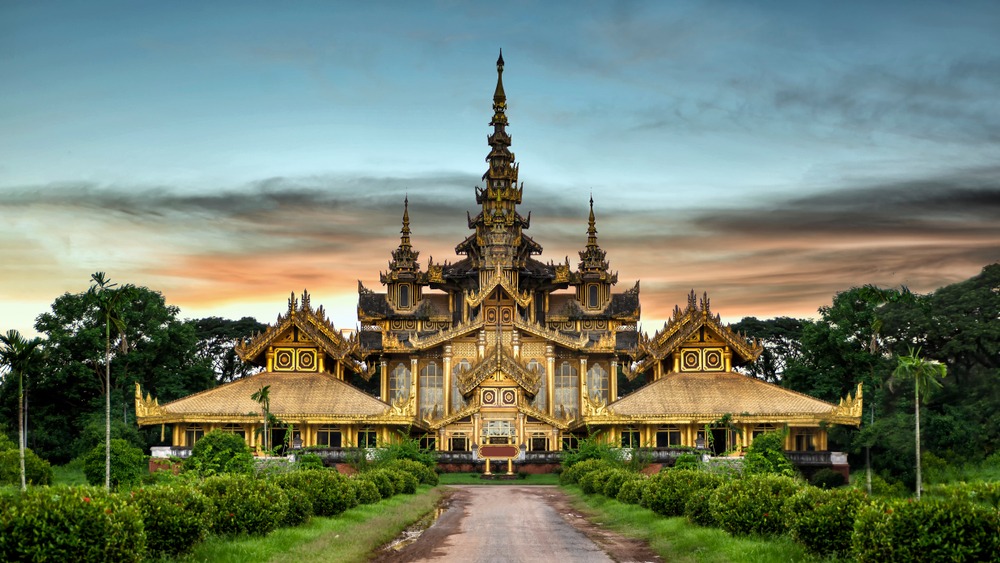
- Bago Royal Palace — a reconstruction of the Mon kingdom palace, with on-site museum.
- Yangon — the natural starting point for a Bago excursion, approximately two hours' drive away.
Frequently asked questions
The dry season, from October to February, offers the most pleasant conditions: moderate heat and clear skies. Avoid the monsoon (June–September) if you wish to enjoy the outdoor terraces.
Yes. Bago is located approximately 80 km from Yangon. Setting out early in the morning, you have time to visit Shwemawdaw and several other Bago sites before returning in the evening.
Shoulders and knees must be covered. Bring clean socks: you will walk barefoot on the terrace tiles, which can become very hot in the middle of the day.
Yes, throughout the grounds. Avoid using flash during ceremonies and ask pilgrims' permission before photographing them.
Plan for 45 minutes to 1.5 hours. If you wish to observe pilgrims' rituals or explore the secondary pavilions, allow two hours instead.
Absolutely. The Shwethalyaung Reclining Buddha, Kyaikpun Pagoda and Bago Royal Palace are all accessible by taxi or trishaw from Shwemawdaw, ideally in the same day.
Interested in this visit?
We can include it in your personalised itinerary.