Phaung Daw U Pagoda
Phaung Daw U Pagoda
On Inle Lake, Phaung Daw U Pagoda houses five gilded Buddhas dating back 800 years and welcomes each autumn the largest festival in Shan State.
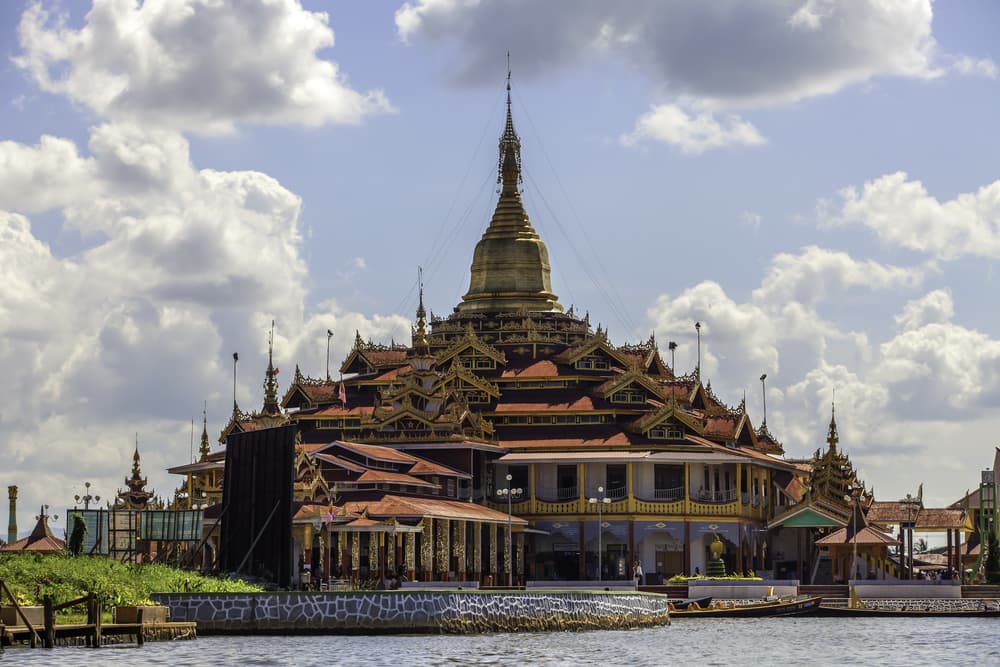
On the western shore of Inle Lake, Myanmar's second-largest lake, the Phaung Daw U Pagoda shelters five small Buddha images completely covered in gold leaf. The most venerated religious site in Shan State, it also serves as the starting point for an annual festival that draws pilgrims from fourteen villages along the shore.
Why visit Phaung Daw U Pagoda
Three elements give this sanctuary its singular character. First, the five gilded images over 800 years old, rendered unrecognizable beneath the thickness of gold leaf accumulated by devotees. Second, the ceremonial barge Karaweik, shaped like a mythological bird, which serves each year for the procession on the lake. Finally, the story of the 1965 shipwreck, which deeply marked local ritual practice and continues to fuel devotion.
The ensemble stands out for its cascading red-tiled roofs and its central gilded stupa crowned with an ornamental hti. Inside, murals narrate episodes from the Buddha's lives according to the Theravada tradition.
History and legend
According to tradition, the five images were brought to the Inle Lake region by Alaungsithu, king of the Bagan empire in the 12th century. A fervent Buddhist sovereign, he is credited notably with the construction of Thatbyinnyu temple in Bagan. The statues, which would thus date back over eight centuries, became objects of regional veneration.
An event in 1965 transformed the festival ritual. On a windy day, the boat carrying the five gilded images capsized. Divers recovered four statues from the lake, but the fifth remained lost. Upon their return to the pagoda, the faithful discovered the missing statue installed in the monastery, as if it had returned on its own. Since this episode, only four images are transported around the lake during the festival; the fifth remains permanently in the sanctuary.
What to see on site
The five gilded images
Preserved in the main hall, the statues today form compact masses of gold. According to Theravada tradition, only men may touch the images to apply gold leaf to them. Women may pray and make offerings from the space reserved for them. Old photographs displayed on the walls show the statues in a more recognizable form, before the accumulation of gold leaf.
The Karaweik barge shelter
Immediately adjacent to the pagoda, a wooden shelter protects the Karaweik ceremonial barge. The vessel evokes the hintha, a Burmese mythological bird: large head at the front, gilded tail at the rear. At its center, an ornate pavilion topped with three Pyatthat roofs in Burmese style accommodates the statues during the procession.
Craft shops
Around and within the complex, stalls offer Shan and Burmese crafts: woven textiles, lacquered objects, wood carvings. Prices are generally negotiable.
When to visit
Visits are possible year-round. The high tourist season on Inle Lake corresponds to the dry season, from November to February, with pleasant weather and stable navigation conditions.
The highlight of the pagoda remains the annual festival, celebrated in the 7th month of the Burmese lunar calendar, the month of Thadingyut (October or November depending on the year). The event lasts 18 days, during which the four images make the rounds of the 14 riverside villages, spending one night at the main monastery of each. The barge is towed by long canoes where around a hundred leg rowers in colorful costumes row in cadence. The highlight is the arrival of the statues in Nyaung Shwe, the main town at the north of the lake.
During the festival and at major Buddhist celebrations, crowds are very large. If you travel on these dates, book accommodation well in advance.
Practical information
- Dress code: shoulders and knees covered, as at all Burmese religious sites. Shoes must be removed before entering.
- Entrance fee: access to the sanctuary is generally free; a separate access fee to the Inle Lake area may be requested at the region's entrance.
- Hours: the monastery is accessible during the day, from morning until sunset.
- Photography: permitted outside; inside the sanctuary, be discreet and avoid flash.
- Women: access to the central platform where the statues rest is reserved for men.
How to get there
The pagoda is located at the western end of Inle Lake and access is by boat only. The usual departure point is the Nyaung Shwe pier at the north of the lake. Allow approximately one hour by motorized canoe to reach the site.
Most day excursions on Inle Lake include Phaung Daw U Pagoda in their circuit, in combination with lakeside villages, floating gardens and artisan workshops. You can book through your accommodation, a local agency or as part of an organized trip to Birmanie.
Nearby attractions
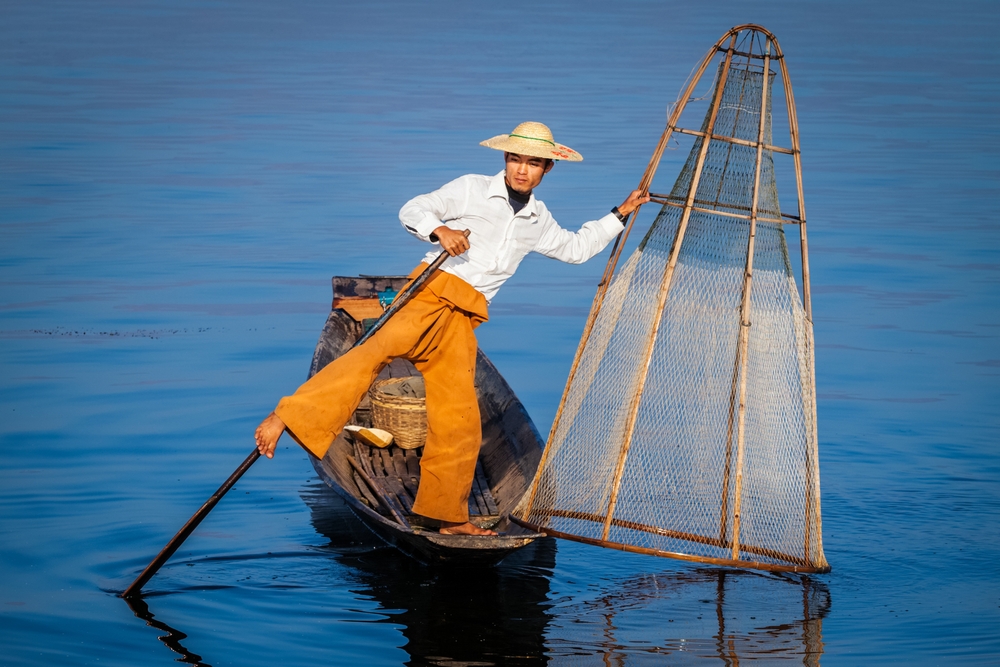
Inle Lake is conducive to several days of exploration. Near the pagoda, you can visit the stilt villages, observe Intha fishermen with their characteristic leg rowing, or visit the ruins of Hta Nee La Leh. Further south in the country, other Buddhist sites are worth visiting, such as the Kyauk Ka Lat Pagoda or the Saddan Cave. In Yangon, the Bogyoke Market offers a panorama of crafts from across the country.
Frequently asked questions
Frequently asked questions
Since the 1965 shipwreck, when the fifth statue was found in the monastery after disappearing in the lake, tradition dictates that it remain permanently in the pagoda. Only the four others make the rounds of the riverside villages.
Yes, access to the sanctuary is open to all. According to Theravada tradition, only men may touch the statues to apply gold leaf to them.
In the month of Thadingyut on the Burmese lunar calendar, that is in October or November depending on the year. It lasts 18 days and culminates with the arrival of the statues in Nyaung Shwe.
By boat only, from the Nyaung Shwe pier. The pagoda is almost always included in Inle Lake excursions.
Allow 30 to 60 minutes on site. The pagoda is typically integrated into a larger day of lake exploration.
To incorporate Phaung Daw U Pagoda and Inle Lake into a complete itinerary, consult our suggestions for travel in Birmanie.
Interested in this visit?
We can include it in your personalised itinerary.