Bogyoke Market
Bogyoke Market
In the heart of Yangon, Bogyoke Market brings together Burmese jade, antiques, textiles and art galleries in a 1926 colonial building.
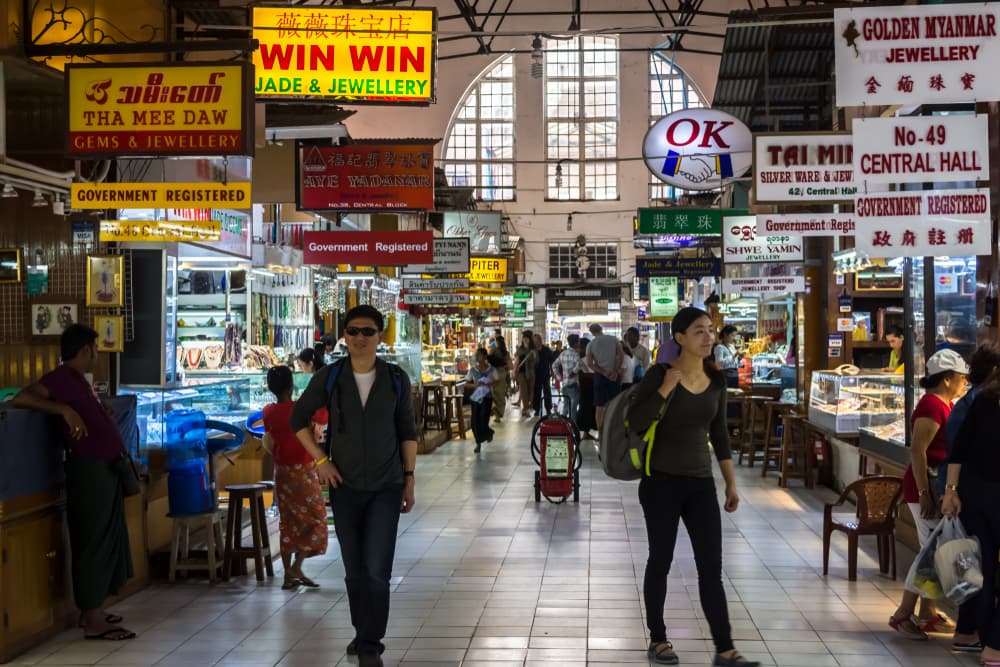
The Bogyoke Aung San Market occupies one of the most recognisable colonial buildings in central Yangon. Beneath its white arcades and original timber framing, roughly 2,000 shops spread across three floors dedicated to jade, precious stones, antiques, textiles and Burmese craftsmanship. It is one of the largest markets in the country and a valuable stop for understanding the trading economy of the former capital.
Why visit Bogyoke Market
The market concentrates in a single location what Birmanie produces most distinctly in terms of objects, stones and fabrics. Antique dealers and art galleries stand alongside jewellers specialising in Burmese jade, jewellery workshops, longyi merchants (the traditional sarong) and sellers of thanaka cosmetics. The appeal is not merely commercial: the colonial structure, circulation between the four wings and the coexistence of local and tourist clientele make Bogyoke an observation point for Burmese urban life.
History: from Scott Market to Bogyoke Market
The market opened in 1926 under the name Scott Market. The name honours two figures from the British administration: James Georges Scott, a colonial official credited with introducing football to Birmanie, and Mr Gavin Scott, the municipal commissioner of the time. The square building, divided into four wings across three storeys, exemplifies British colonial commercial architecture of the interwar period.
After independence, the market was renamed in honour of General Bogyoke Aung San, a central figure in the Burmese independence movement and father of Aung San Suu Kyi. In 1990, an extension was created across the street. This annex, more modest in scale, primarily serves the local population, while the historic building retains a more touristic and heritage-focused purpose.
What to see and what to seek in the aisles
Antiques and art galleries
Antique dealers concentrate on the ground floor and first floor. You will find antique lacquerware, traditional puppets, carved wood, second-hand Buddhist statues and liturgical objects. Several galleries display contemporary Burmese paintings, including works by established Yangon artists.
Jade and precious stones
The market is renowned for Burmese jade, as well as rubies, sapphires and spinels extracted from the northern regions of the country. Quality and origin vary considerably from stall to stall: for high-value purchases, prioritise shops displaying a certificate or ask to examine the stone in natural light.
Textiles and crafts
Longyis, cotton and silk fabrics, Shan scarves and tribal embroideries occupy a significant portion of the stalls. It's also a good place to pick up thanaka, Burmese tea or Bagan lacquerware.
Dining on site
Several small restaurants serve Burmese and Chinese dishes. Mohinga, a fish and rice noodle broth considered the national dish, is among the reliable choices for a mid-visit break.
The Zay Thingyan festival
The market participates in celebrations of the Burmese New Year through Zay Thingyan, its own water festival organised on the eve of Thingyan's first day, typically in April. Merchants have perpetuated this tradition for decades: water splashing, dancing, costumes and distribution of seasonal specialities such as thingyan rice, Mont Lone Yay Paw (rice balls stuffed with palm sugar) and Shwe Yin Aye (iced coconut milk dessert). Good to know: the market is closed during the Thingyan festival itself.
When to visit
The most comfortable window spans November to February, the dry and cooler season in Yangon. The monsoon from June to September makes city travel more challenging without preventing a visit. To observe Zay Thingyan, target the days immediately preceding Burmese New Year in April, keeping in mind the closure during the national festival.
Practical information
- Address: Bogyoke Aung San Road, Pabedan, Yangon city centre
- Opening days: Tuesday to Sunday, daytime. Closed Mondays and public holidays
- Admission: free
- Payment: Burmese kyats primarily; some shops accept dollars for significant purchases
- Negotiation: common practice, especially on antiques and textiles; remain courteous and compare multiple stalls
- Duration of visit: allow 1 to 2 hours for a complete tour, longer if you're purchasing jade
How to get there
The market is located on Bogyoke Aung San Road, in the heart of Yangon, near the central railway station. From most downtown hotels, access is on foot in 10 to 20 minutes. Taxi remains the simplest option from more distant quarters or from Yangon International Airport, situated north of the city. The Phaya Lan station on the Yangon Circular Railway also serves the area.
What to see nearby
The market fits into a dense heritage trail in the heart of downtown:
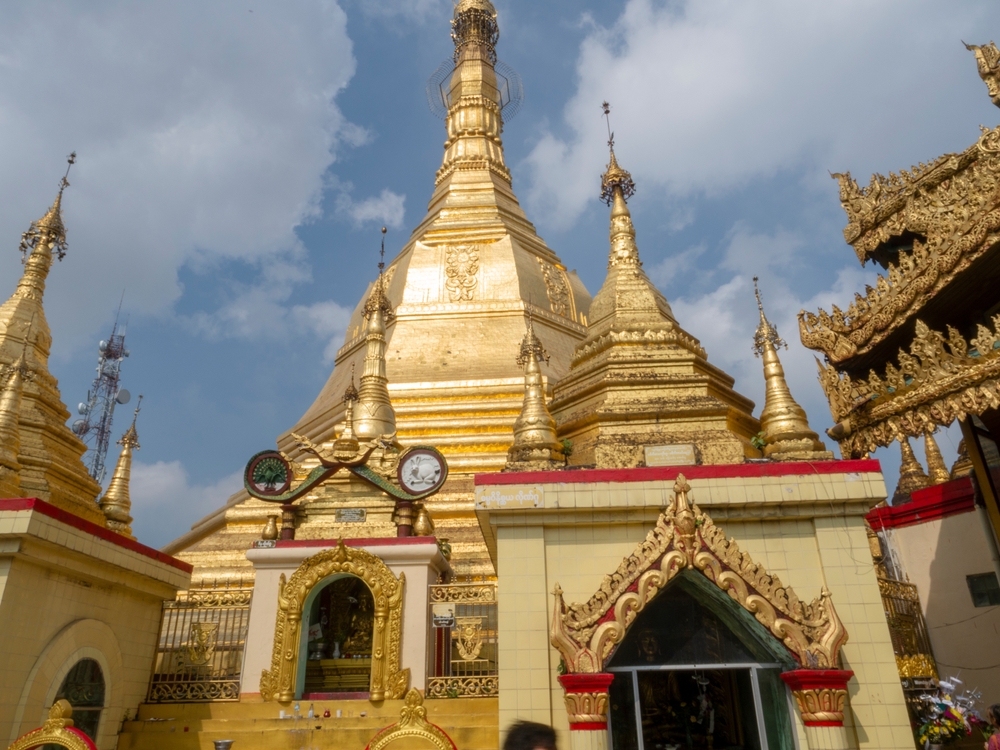
- the Sule Pagoda, a golden landmark at the centre of major colonial thoroughfares
- the Cathedral of the Immaculate Conception, a testament to Catholic Yangon
- the Musmeah Yeshua Synagogue, Birmanie's last active synagogue
- the Shwe Bon Thar Street, a typical commercial avenue of old Rangoon
To extend your exploration beyond Yangon, consult our guides on the Kyauk ka lat Pagoda, the Phaung Daw U Pagoda or Saddan Cave.
Frequently asked questions
Frequently asked questions
The market is open Tuesday to Sunday during the day. It is closed on Mondays, public holidays and during the Thingyan festival in April.
Yes, negotiation is common, particularly for textiles, antiques and jewellery. Compare several stalls before committing and remain measured in your discussion.
For significant purchases, request an authenticity certificate, examine the stone in natural light and favour established shops on the ground floor. If in doubt, it's better to decline or consult a gemologist.
The Burmese kyat is the primary currency. Some merchants accept US dollars for major transactions, provided the notes are recent and in perfect condition.
Allow 1 to 2 hours for an overview. If you're shopping for jade or antiques, set aside half a day to compare shops.
Incorporating Yangon into a Birmanie trip
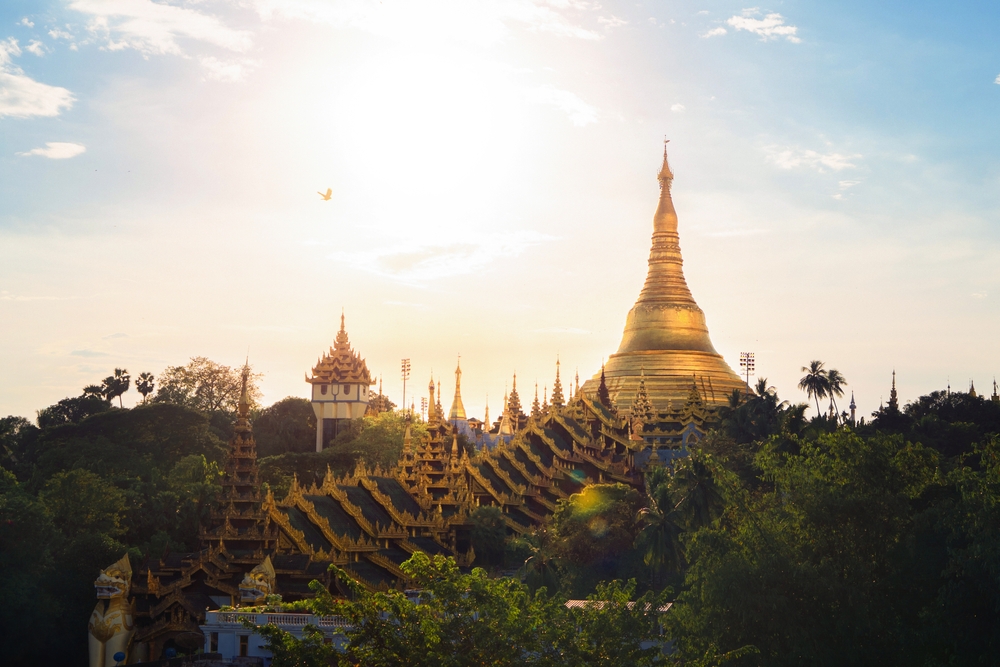
Bogyoke Market fits naturally into a Yangon city stopover, complementing the Shwedagon Pagoda and colonial downtown. To build a complete itinerary between Yangon, Bagan, Inle Lake and Shan State, consult our Birmanie travel offerings.
Interested in this visit?
We can include it in your personalised itinerary.