Bago
Bago
Ancient capital of the Mon kingdom 68 km from Yangon, Bago concentrates thousand-year-old pagodas, giant reclining Buddhas, and endless rice plains. Complete visitor's guide.
Discover Myanmar in a different light with a brief day trip to Bago, one of the country's greatest symbols of Buddhism. It's a destination rich with discoveries, particularly in historical, cultural, and religious monuments. Captivated by the pagodas and countless Buddha statues, both grand and intimate, countless travelers have returned from their journey to Bago singing praises of the location's beauty and the region's spiritual grandeur.
Bago, An Essential Stop on the Road to the Golden Rock
Capital of its namesake region, Bago sits 68 km northeast of Yangon. This city enjoys the advantage of being on the way to the legendary Golden Rock, one of the essential "must-sees" during a journey to the "Golden land".
While pagodas and Buddha statues have made Bago's reputation, the region also distinguishes itself with its flat terrain wonderfully blanketed with rice paddies stretching to the horizon and whose shades of green and gold alternate with the seasons, adorning the landscape with natural beauty.
A Brief History
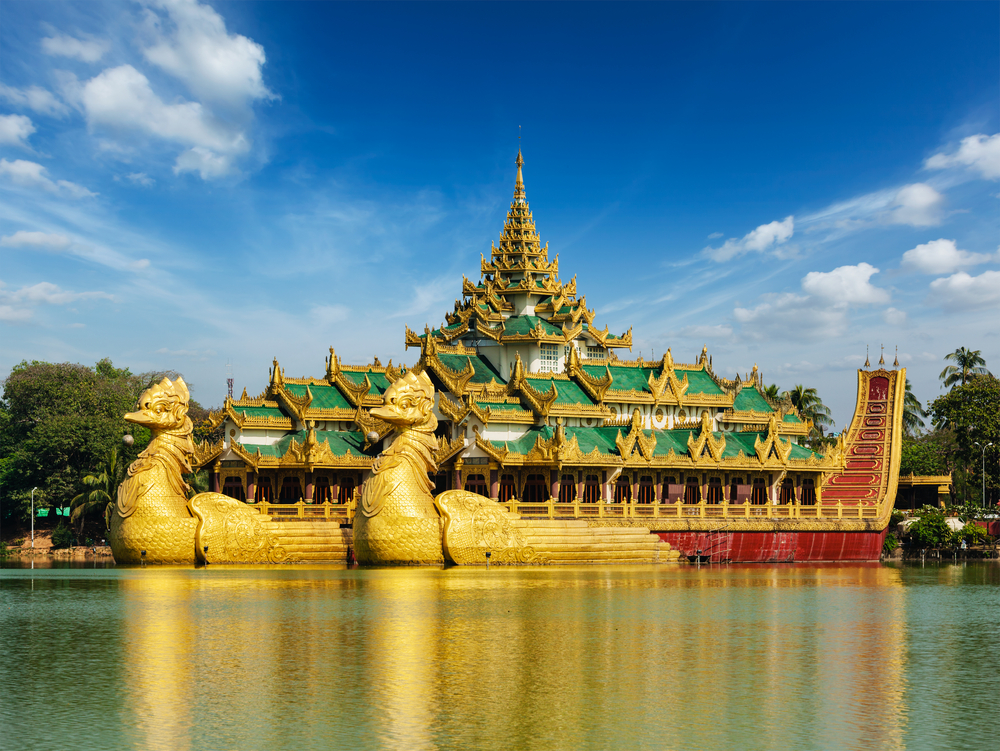
Once called "Pegu", Bago was one of three capitals (alongside Thaton and Nakhon Pathom) of the Mon kingdom that dominated southern Myanmar over 1,500 years ago. Legend tells that the city of Bago was founded by two Mon princesses from Thaton in 573. They undertook this venture following a favorable omen: a pair of sacred Brahman geese landed on a tiny islet in the Gulf of Martaban. The female, being smaller, had to perch upon the male's back due to the narrow space—a moment that inspired the city's original name, "Hamsawaddy" or "Hanthawaddy", meaning "kingdom of the goose". Bago's symbol is likewise a hamsa (female goose or swan, mount of the god Brahmā). Forever honoring this legend, the seal of Bago Region bears two superimposed geese.
What to See in Bago?
Two Reclining Buddhas
Shwe-Tha-Lyaung: One of the world's largest reclining Buddha images, this 55-meter-long and 16-meter-high statue is believed to be over 250 years old. It's sheltered beneath a metal roof and considered a sacred sanctuary in Myanmar.
Naung Daw Gyi Mya Tha Lyaung: Resting in the open air near Shwe-Tha-Lyaung, this reclining Buddha statue offers wonderful photo opportunities. Constructed in 2002, Naung Daw Gyi Mya Tha Lyaung, stretching 76 meters, ranks among Myanmar's most fascinating landmarks.
Pagodas and Temples
Shwe-Maw-Daw Pagoda: Arguably Myanmar's largest pagoda, this stūpa measures 114 meters, surpassing Yangon's Shwedagon Pagoda by 16 meters. Dating back over 1,000 years, it has suffered considerable damage and been restored multiple times, gaining greater height with each reconstruction. Today, this golden pagoda stands as the country's tallest and dominates Bago's skyline.
Kyaik Pun Pagoda: Among Bago's must-sees, this architectural marvel features 4 colossal seated Buddha statues positioned back-to-back against a massive brick pillar. Each statue faces one of the four cardinal directions. Built in 1476 by King Dhamma Zedi, this nearly 700-year-old pagoda continues to astonish visitors with the brilliant golden robes adorning its four statues.
The Snake Temple or Python Monastery: The site's name derives from the enormous python, said to be 125 years old, that dwells here. Burmese Buddhists believe the creature is the reincarnation of an ancient monk. The temple draws numerous pilgrims who make donations (banknotes draped across the python's body by attendants) to seek the animal's blessings.
Other Interesting Sites to Visit
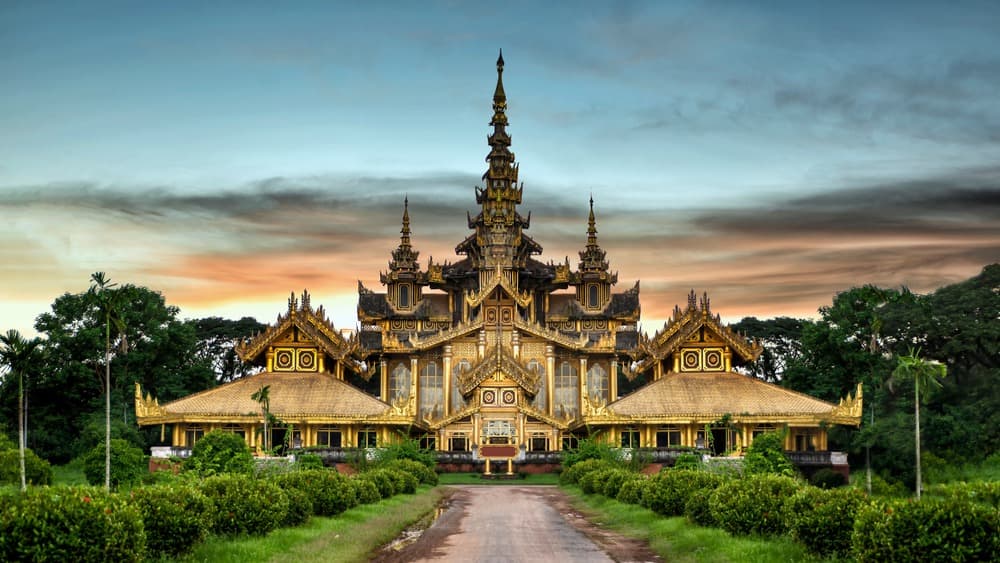
Bago fully unleashes its tourism potential to leave visitors enchanted. While you're here, take full advantage by also visiting the Kambazathadi Golden Palace, the Khat Khat Way Monastery, one of Myanmar's three largest, or the Kuang Yeeng Chinese Temple for a pleasant change from Burmese temples.
What to Do in Bago?
Stroll Through Bago's Plains
To connect more closely with nature, treat yourself to a gentle walk through Bago's verdant plains where the tender green of rice paddies (in February, during rice transplanting season) helps you escape the concrete of major cities. The fresh countryside air will do wonders for your spirit. At the same time, you'll spot women engaged in the work of rice planting.
Explore Bago Market
This visit offers a chance to take the pulse of the city. Unpolished yet utterly authentic, Bago Market offers diverse food products of genuine interest, sure to pique your curiosity. Along the riverbanks, you'll find vegetable and fish stalls; under a corrugated shelter, an array of spices. Clothing displays occupy separate shops.
The most common route is by train from Yangon (68 km away). Many choose to make it a day excursion by bus or taxi. The journey between Yangon and Bago takes about 2 hours by road.
You can also board a train from Mawlamyine and cover 154 km to reach Bago. You might also opt for a departure from Pyay, 212 km from Bago. The road is excellent for driving, with a 5-hour journey before arrival at your Bago destination.
Want to discover this destination?
Our local advisors design your tailor-made trip.